
How a private jet designer plans durable, quiet and connected cabins for heavy-use charter fleets.
Charter cabins do more work than almost any other part of business aviation. They fly more hours, carry more passengers and are expected to look new for longer. At the same time, passengers now expect a quiet cabin, fast Wi-Fi and seats that work for a full day of meetings. Meeting all of that is a private jet design challenge, and a private jet designer has to balance durability, sound, comfort and technology that will not age out in two years.
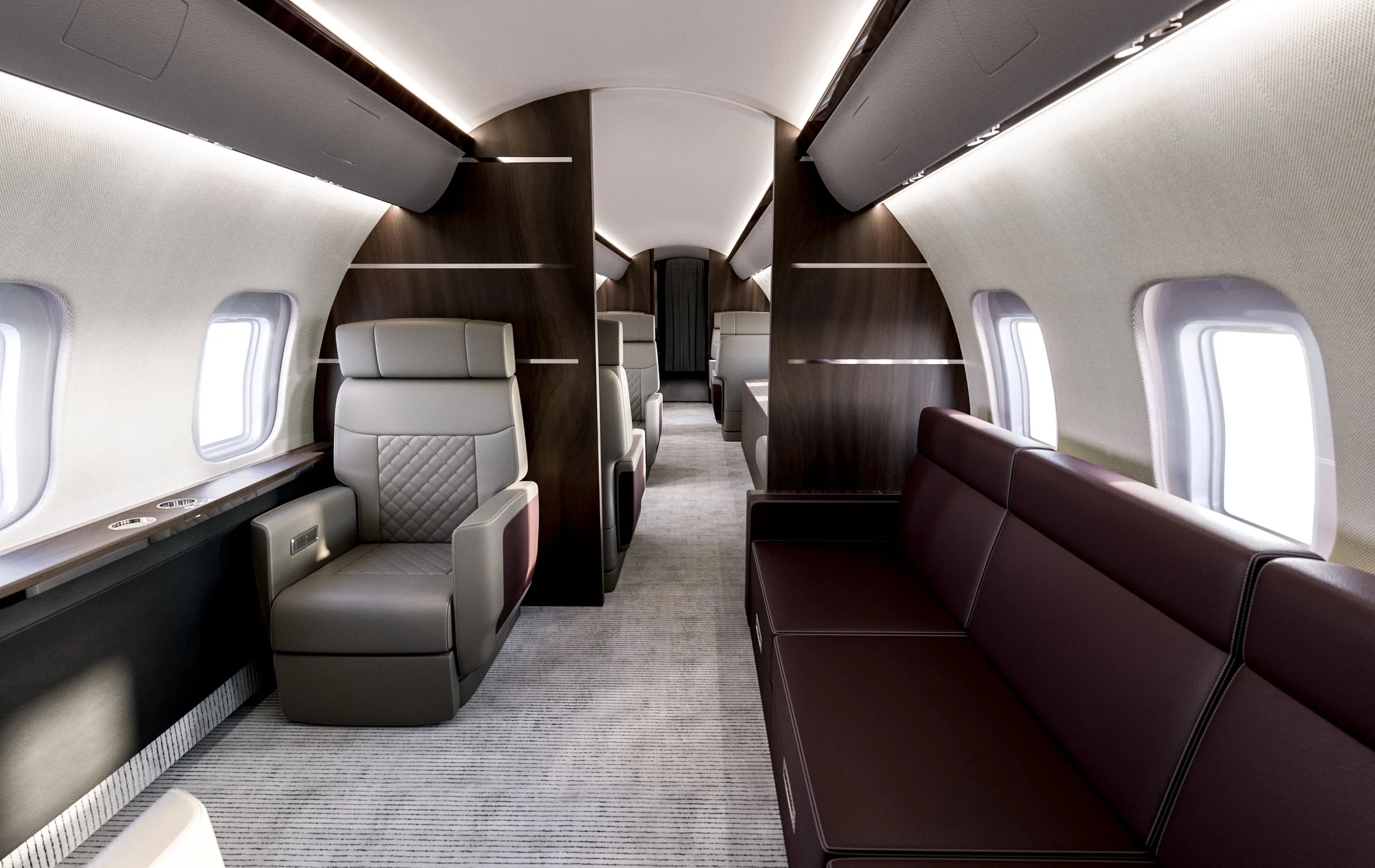
Charter cabins have to be tougher by design
Duncan Aviation’s George Bajo told AvBuyer that Part 135 charter operators want fittings and finishes that are very durable and easy to maintain. He said they often choose neutral palettes and darker furnishings, so smudges don’t show and surfaces wipe clean quickly. Another AvBuyer report explains why: fleet operators fly their aircraft far more often than private owners, so they look for furnishings that are more damage-tolerant. Elliott Aviation adds that aircraft with high flight hours need highly durable materials, because cheaper ones can lead to significantly higher long-term costs.
Downtime matters as much as durability. CL Aviation puts the average complete interior refurbishment at 6 to 8 weeks and recommends scheduling it around a major inspection, when the cabin is already removed for maintenance.
Acoustics: the quiet cabin is now a selling point
Noise is one of the clearest differences between a business jet and an airliner. According to a ranking compiled by jet card operator BlackJet, standard airliners run at 75 to 85 dB, while modern long-range business jets target under 50 dB SIL. The same ranking lists the Gulfstream G700 as low as 47.6 dB SIL in cruise, and notes that a 3 dB reduction halves the sound energy. Because these are manufacturer and third-party figures and test methods vary, treat them as indicative.

Much of that quiet comes from the airframe, but the interior matters too. The Business Jet Interiors International cabin sound feature notes that soft materials absorb sound while hard surfaces reflect it and amplify noise. It quotes an industry source who says the best sound insulation technology has always been the quality of the installation. It also reports that Jet Aviation worked with Gulfstream on analytical models that predict cabin noise for different interior layouts, and that insulation has to be balanced against weight.
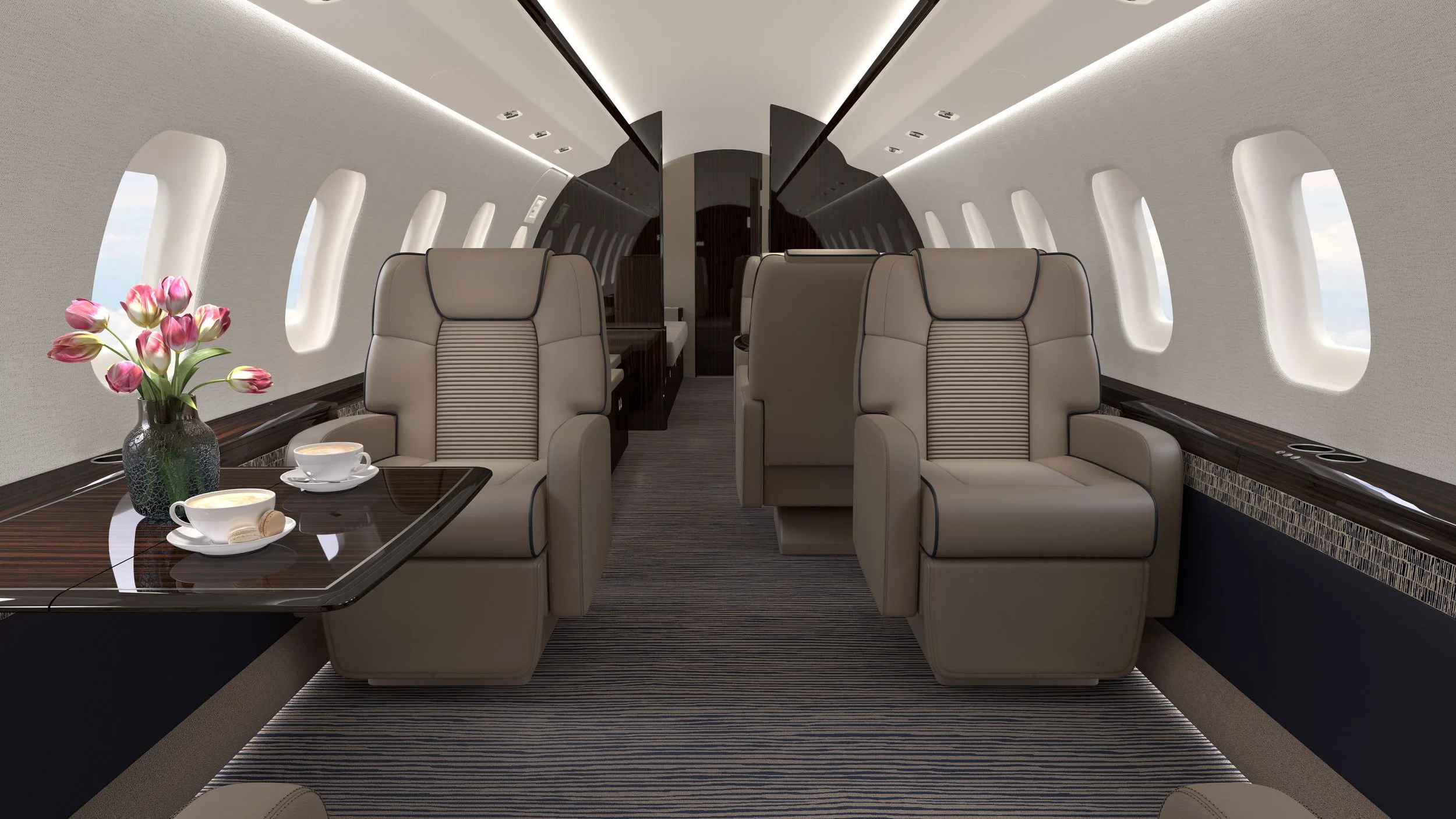
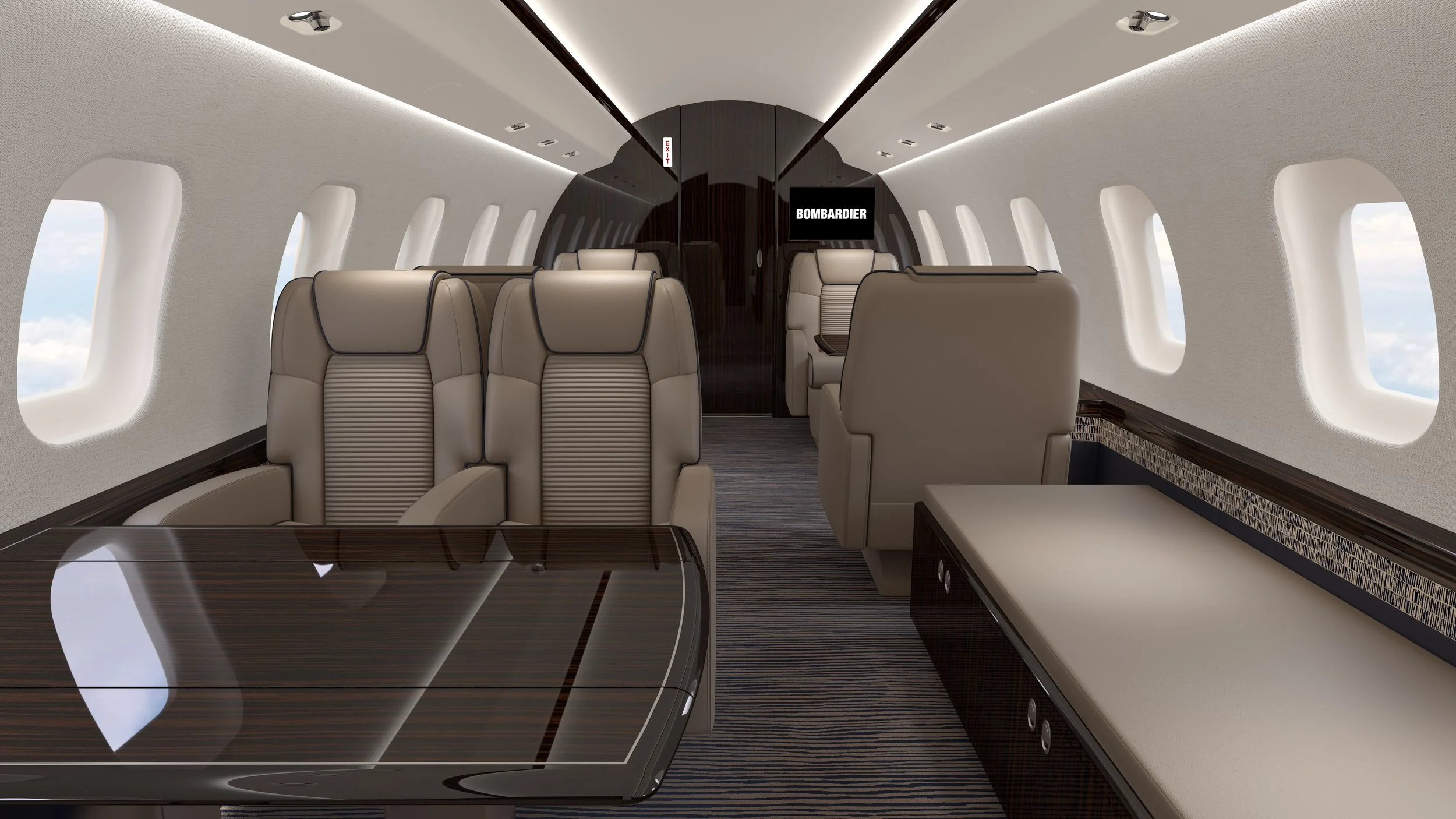
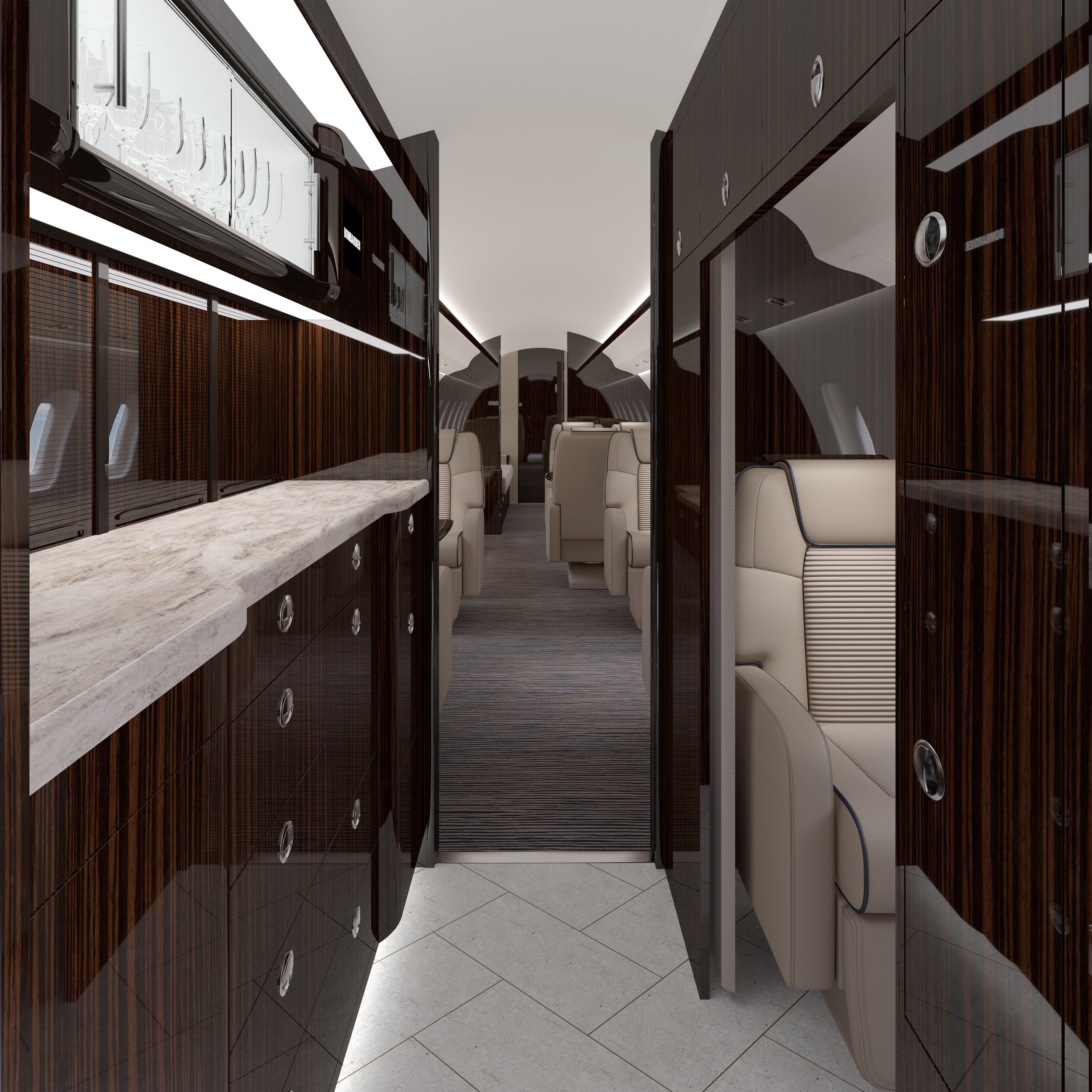
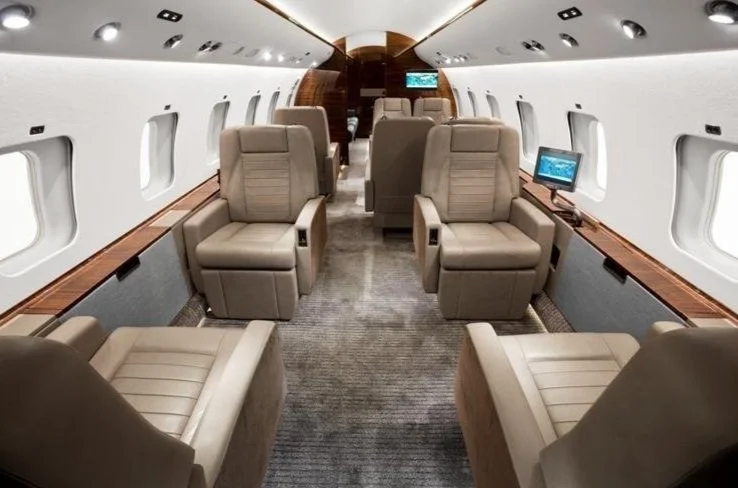


That balance is tricky for charter. The tough, wipe-clean surfaces that operators like are often hard, reflective ones. A designer has to place absorbent materials, seat insulation and layered treatments where they help most, without adding weight that cuts range.
Ergonomics and wellbeing
Passengers now compare every cabin with the best new aircraft. Gulfstream’s announcement for the G700 cabin lists a cabin altitude of 2,916 feet at 41,000 feet, 100% fresh air, a high-definition circadian lighting system and seats with advanced ergonomics. These are manufacturer claims, but they show where expectations are heading: lower fatigue, better light and seating that supports hours of work or rest.
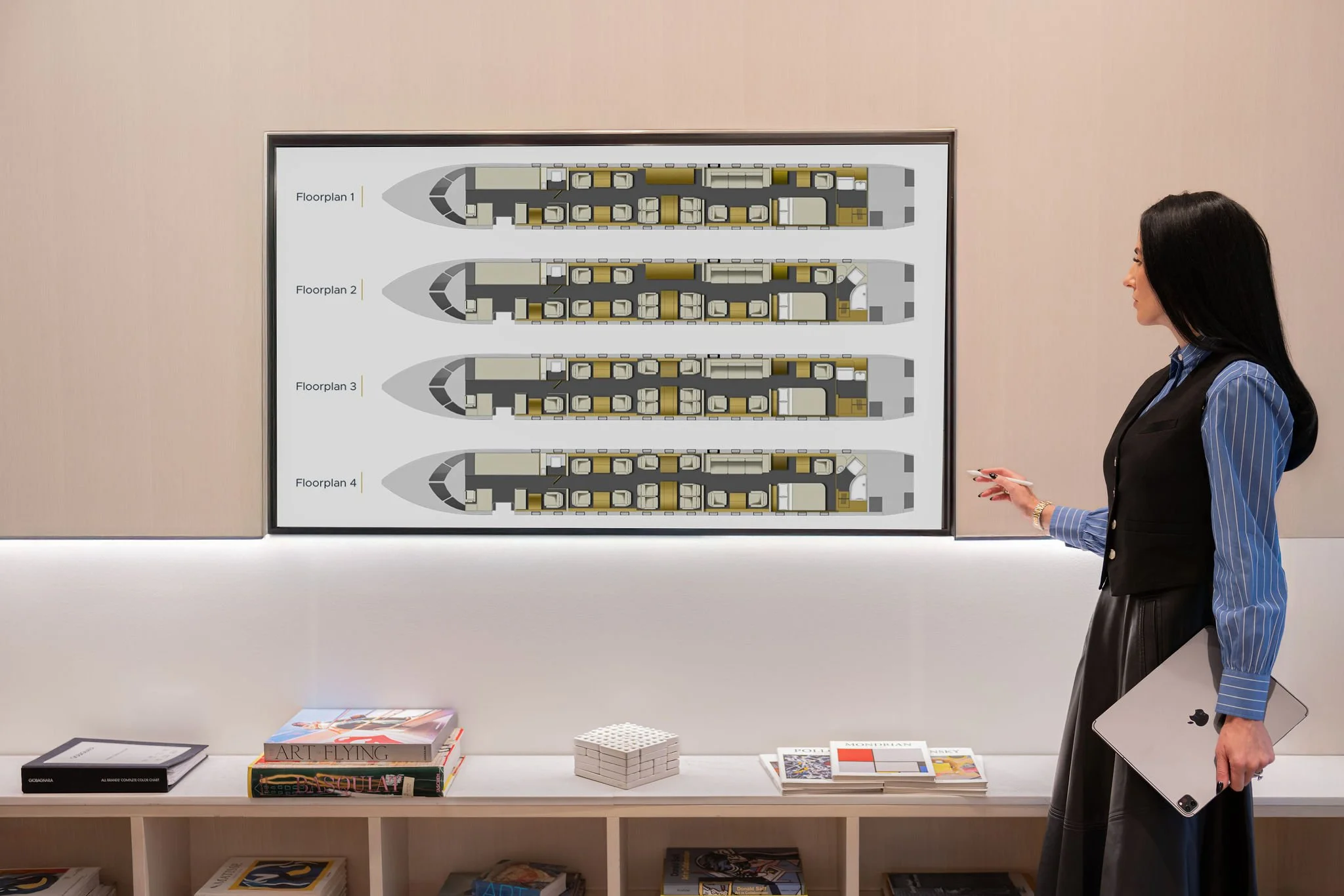

Because lighting, controls and seating are installed together, these features are easiest to deliver when they are planned as part of the cabin layout rather than added later. For a charter fleet, the same layout also has to stay easy to clean and quick to turn around.
Connectivity: plan for the network, not just the box
Connectivity can go out of date on the network operator’s schedule, not the owner’s. Skyservice reported that Gogo planned to retire its legacy air-to-ground network in May 2026, and that aircraft not upgraded would lose in-flight Wi-Fi, which affects passenger experience and resale value. Viasat likewise said its legacy Ku-band service would sunset in September 2026.
The lesson is to choose systems that can adapt. Honeywell and Dassault announced JetWave X for Falcon jets as a line-fit and retrofit option, and Honeywell says it is compatible with future Ka-band networks so owners can switch providers. Installation can also be quick when planned: in a GlobalAir.com feature, Sarah Larranaga cites roughly 1 to 3 weeks for a connectivity installation.
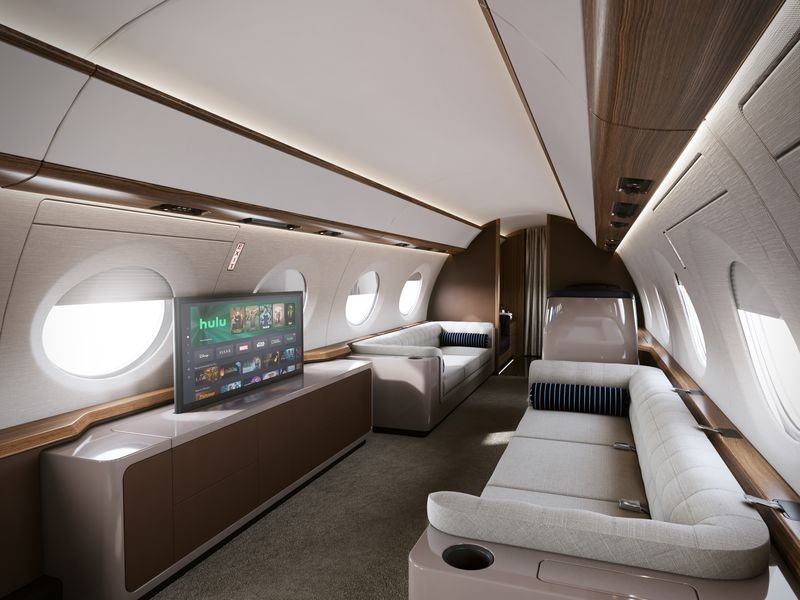
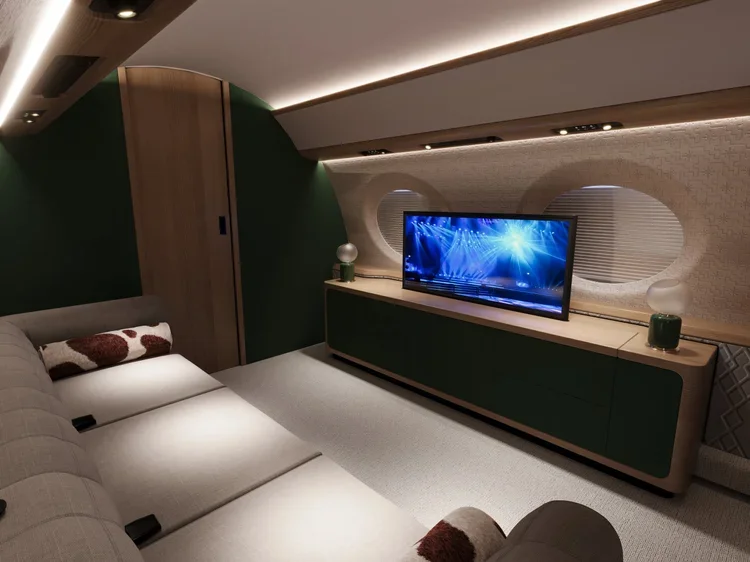
Integration is where the real work sits. On SlivAir, Paris Hilton’s Gulfstream G450 designed by Sarah Larranaga Aviation Design, the new Cabin Management Solutions Empire CMS, Starlink high-speed internet, Prizm lighting and Alto Aviation audio all had to work with the aircraft’s existing Gulfstream systems, within about four and a half months of downtime. For more on how these systems fit together, see our briefing on private jet technology upgrades.
Next-generation charter cabins need to be tough, quiet, comfortable and ready for the next network upgrade. That means choosing materials for wear and sound together, planning ergonomics and lighting from the start, and picking connectivity hardware that can change networks. An experienced aircraft designer treats those as one plan, so the cabin stays competitive for longer. Robb Report’s 2026 Best of the Best issue spotlighted Sarah Larranaga among nine innovators, which reflects the experience behind that approach.
Operators and owners planning a cabin refresh can talk through scope and timing with Sarah Larranaga Aviation Design by clicking the button below.