
What a private jet designer has to integrate when upgrading connectivity, cockpit and cabin systems.
Technology now decides how a private jet feels, how it flies in regulated airspace, and what it will sell for. Connectivity, cabin management and avionics each have their own suppliers, certifications and lead times, which makes upgrading them a design and project-management problem as much as an equipment choice. Here is where the technology stands, based on current industry reporting, and what a private jet designer has to coordinate to make it work.
Connectivity: low Earth orbit is the new baseline
Older business jet Wi-Fi relies on geostationary satellites. According to GlobalAir.com, low Earth orbit (LEO) satellites fly lower than geostationary ones, which dramatically shortens signal latency. Two systems lead the retrofit market.

Gogo’s Galileo comes in two sizes. In its year-end report, the company says the FDX antenna for large jets offers 200 Mbps speeds, while the smaller HDX offers 60 Mbps. Starlink is the other option. Aviation news outlet AIN reports that Starlink’s service offers download speeds of up to 220 Mbps and upload speeds up to 25 Mbps. These are vendor figures, and real-world performance varies with aircraft, antenna placement and network load.
Certification is catching up quickly. Business Airport International reports that Gogo received FAA approval for installing Galileo HDX on Gulfstream G650 and G650ER aircraft, and AIN reports that Dassault Falcon obtained an STC for the HDX on the Falcon 7X and 8X. GlobalAir.com notes that connectivity STCs are now arriving faster than owners can install them, so a jet that lacks LEO risks looking dated next to similar aircraft on the market. Planning matters because equipment lead times are real. In a GlobalAir.com feature, designer Sarah Larranaga says some top high-speed equipment currently has a 12 to 16 week lead time.
Cabin management: obsolescence is a dispatch risk
The cabin management system (CMS) controls far more than entertainment. Duncan Aviation warns that an obsolete CMS can put a jet at risk of not being dispatched, since it also handles lighting, cabin briefing, lavatory operation and galley functions. The same source lists the main retrofit options: Collins Aerospace Venue, Honeywell Ovation Select and Lufthansa Technik Nice, which offer touch-screen control, iPad remote control, high definition video and surround sound. Inflight reports that Collins says Venue has 1,700 installations on 50 aircraft models.
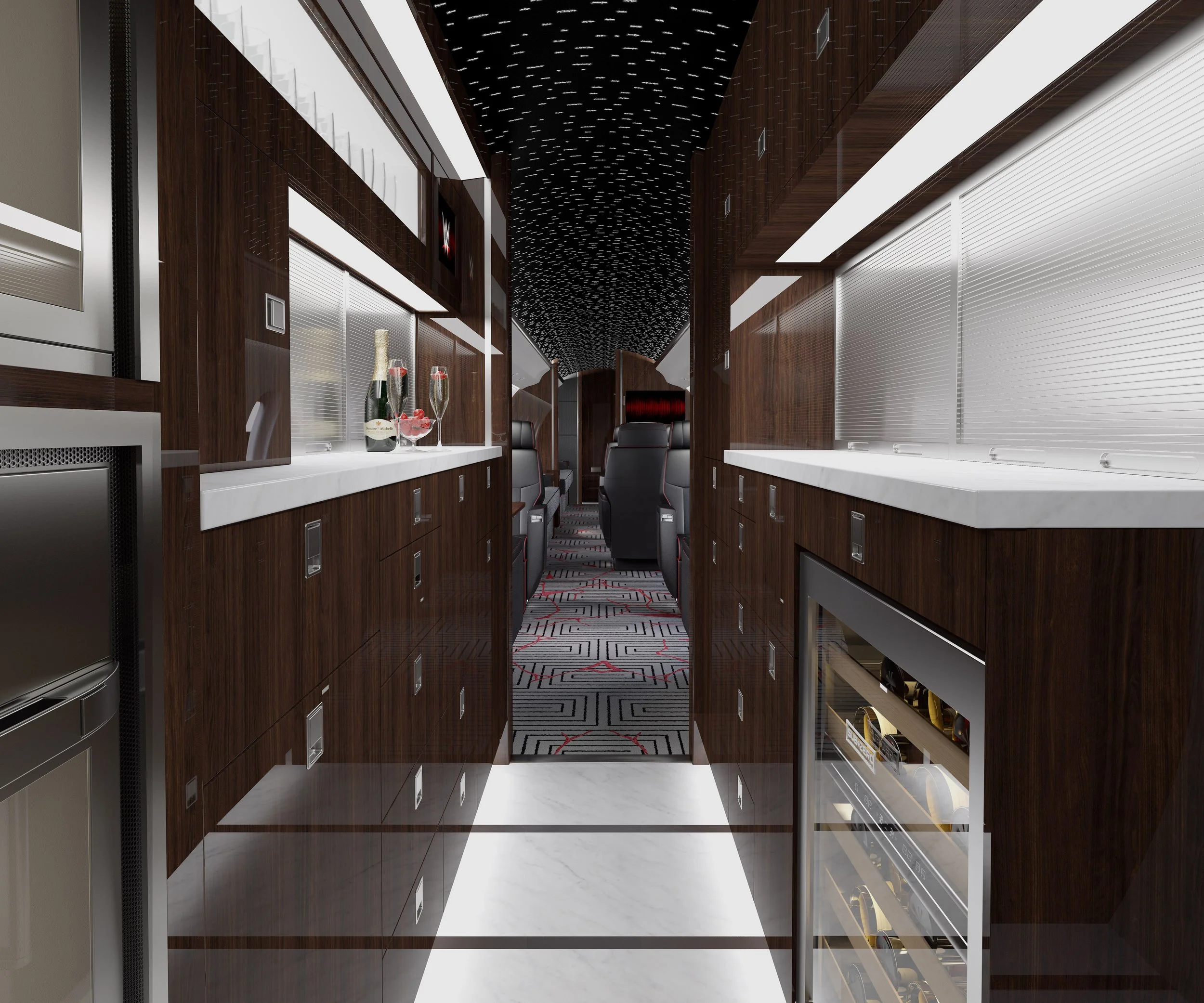
The design implications are practical. Duncan notes that wood refinishing is often one of the biggest costs of a CMS upgrade, because new controls and displays have to fit into existing cabinetry. For a more budget-conscious route, StandardAero says an Alto Aviation upgrade typically costs $400,000 to $600,000 and takes 65 to 75 days. That range applies to the aircraft types StandardAero lists, not to every jet.
Avionics: regulation keeps moving
Avionics upgrades are driven by rules as much as preference. GlobalAir.com reports that the NTSB has recommended ADS-B In traffic display and audible traffic alerts for aircraft already required to carry ADS-B Out. This is a recommendation, not a regulation, and the FAA has not committed to it.
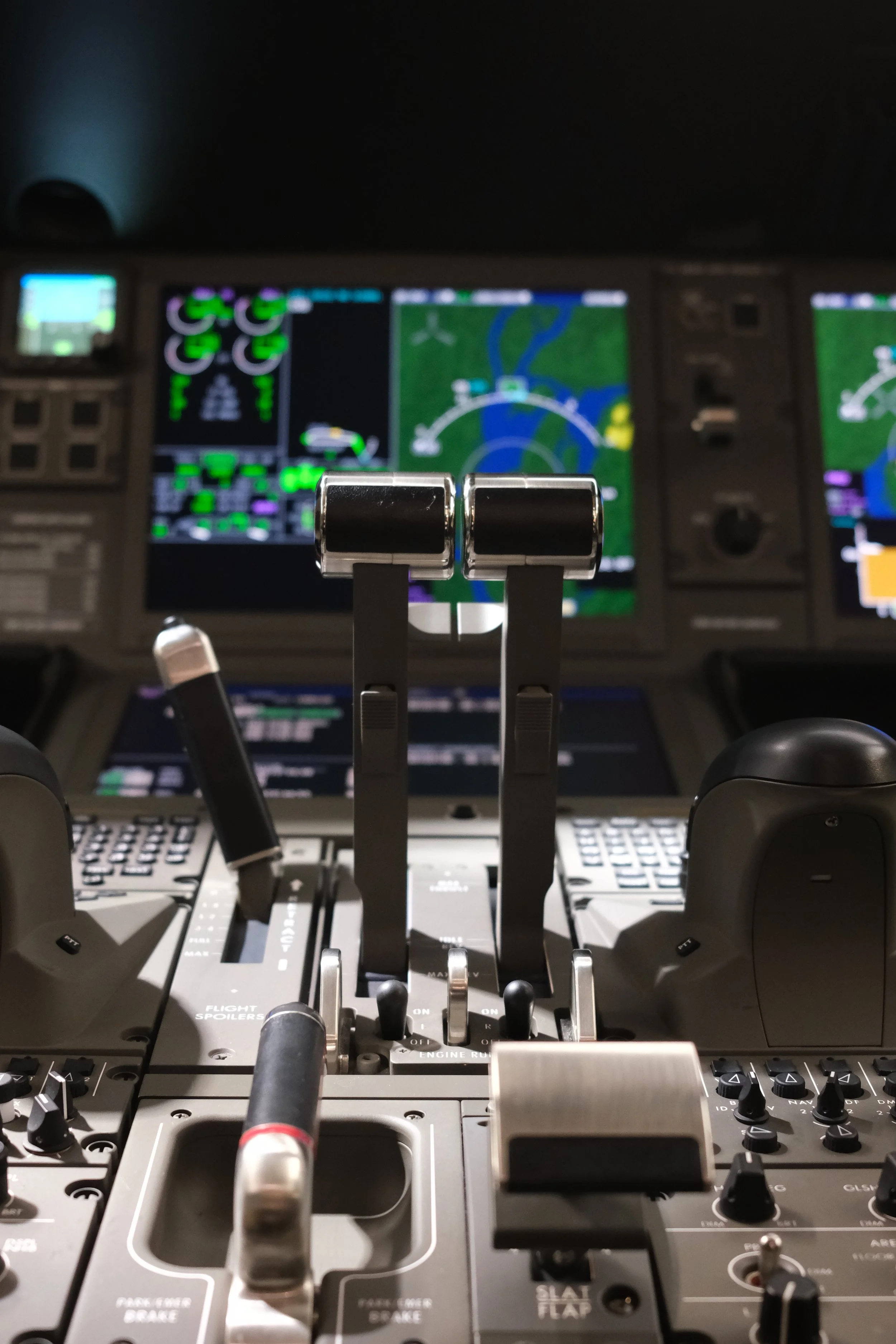
But the same report points out that older aircraft with minimum-compliance ADS-B Out systems would face the greatest upgrade burden, and that the market tends to price future retrofit obligations into current aircraft values. For buyers and sellers, avionics status is now part of the negotiation.
Why integration is a design discipline
Each of these systems has to work with the others and with the aircraft. When Sarah Larranaga refurbished a Gulfstream G450, she told Robb Report’s Malaysia edition that every new system had to work with the existing Gulfstream systems. The project took five months, and she said the result gave the cabin a “private 4K theatre in the sky.” Her advice in the GlobalAir.com feature points the same way: professional oversight covering weight, certification and quality control catches problems during the work rather than after delivery.
Completed examples
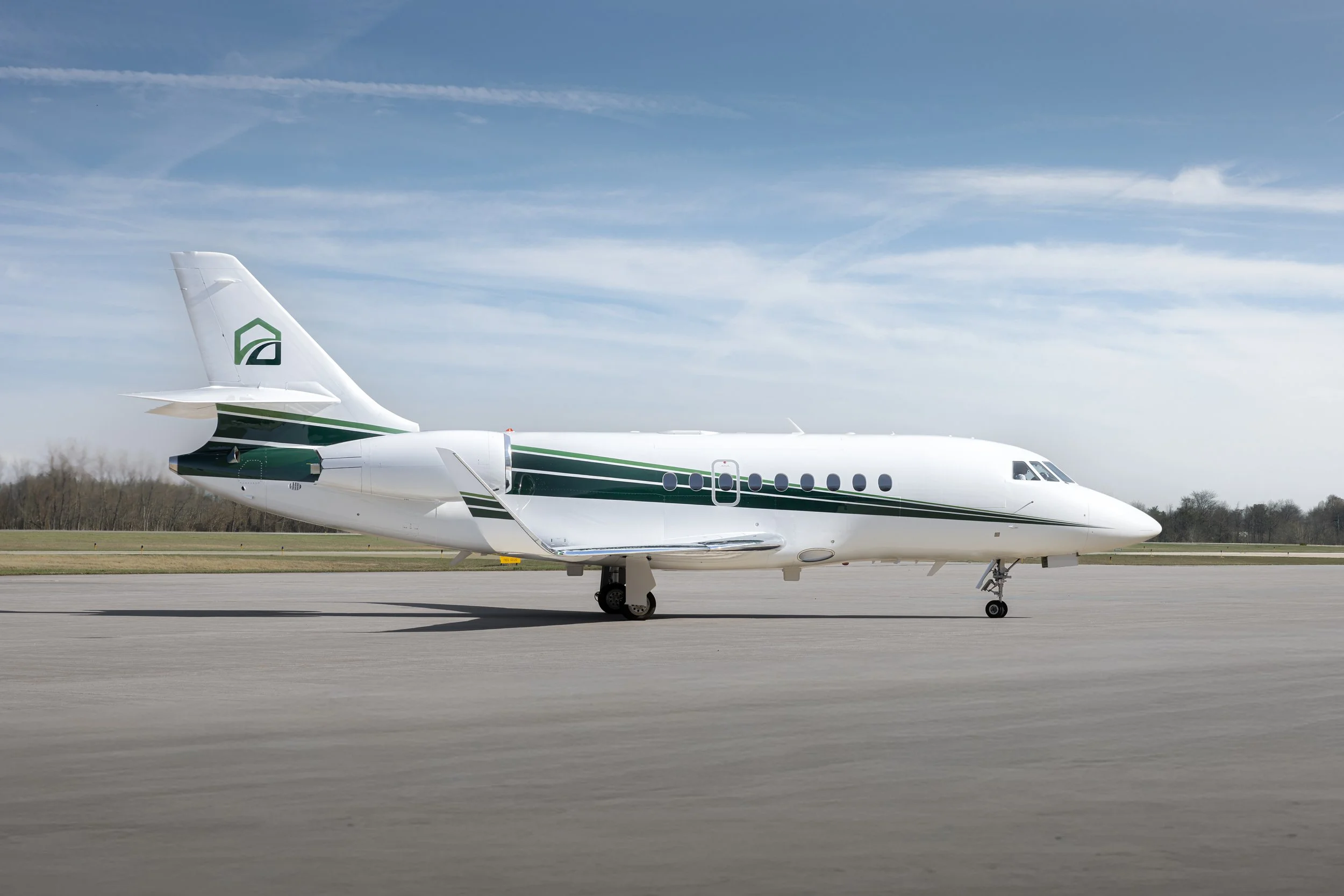
Verdant Sky is a fully upgraded Dassault Falcon 2000 designed by Sarah Larranaga Aviation Design. It is equipped with Starlink high-speed Wi-Fi, a Rockwell Collins Venue cabin management system, Alto sound and Prism lighting, with West Star Aviation as the completion center. The organizer of the International Yacht & Aviation Awards lists it as shortlisted for the 2026 Private Jet Design Award.
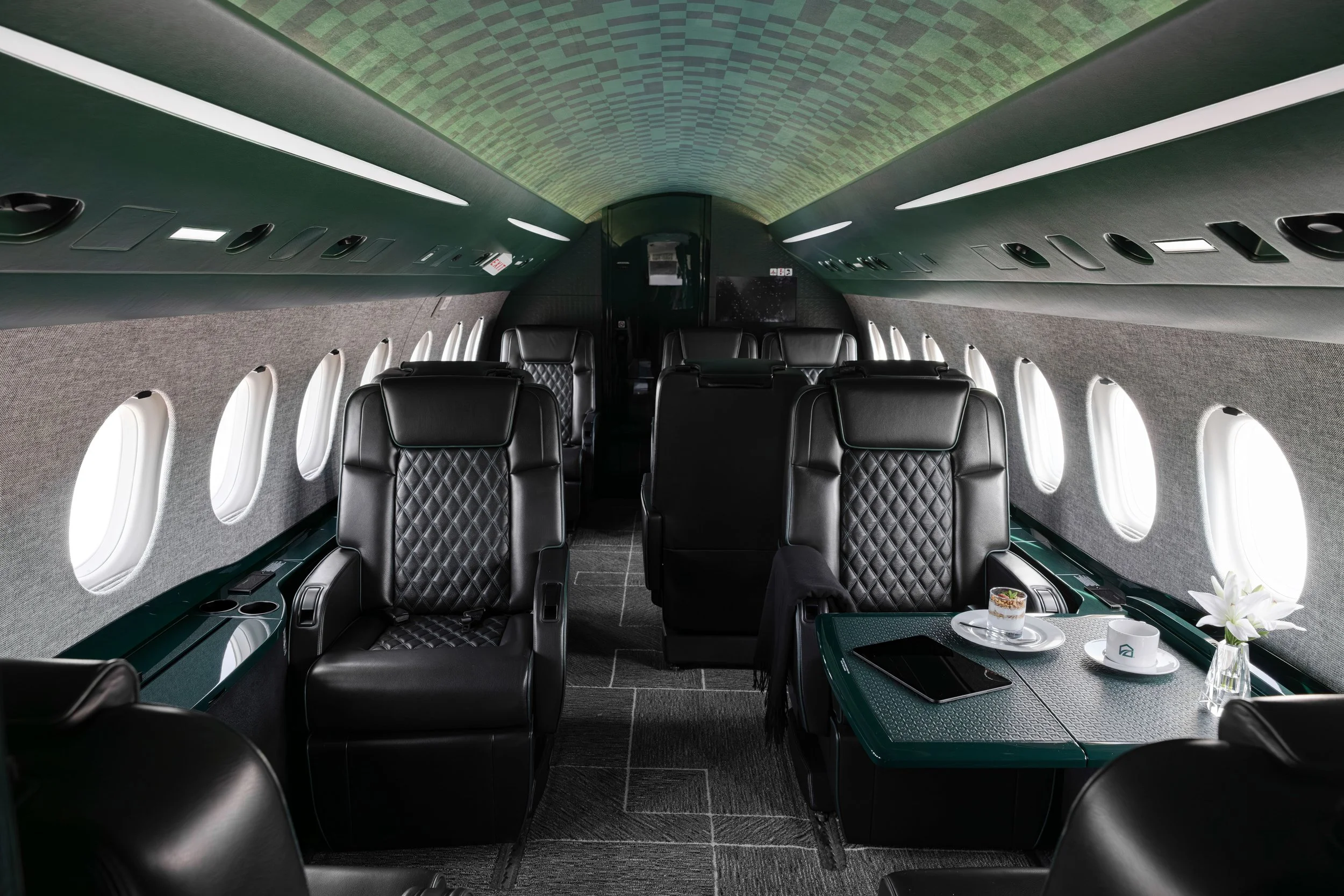
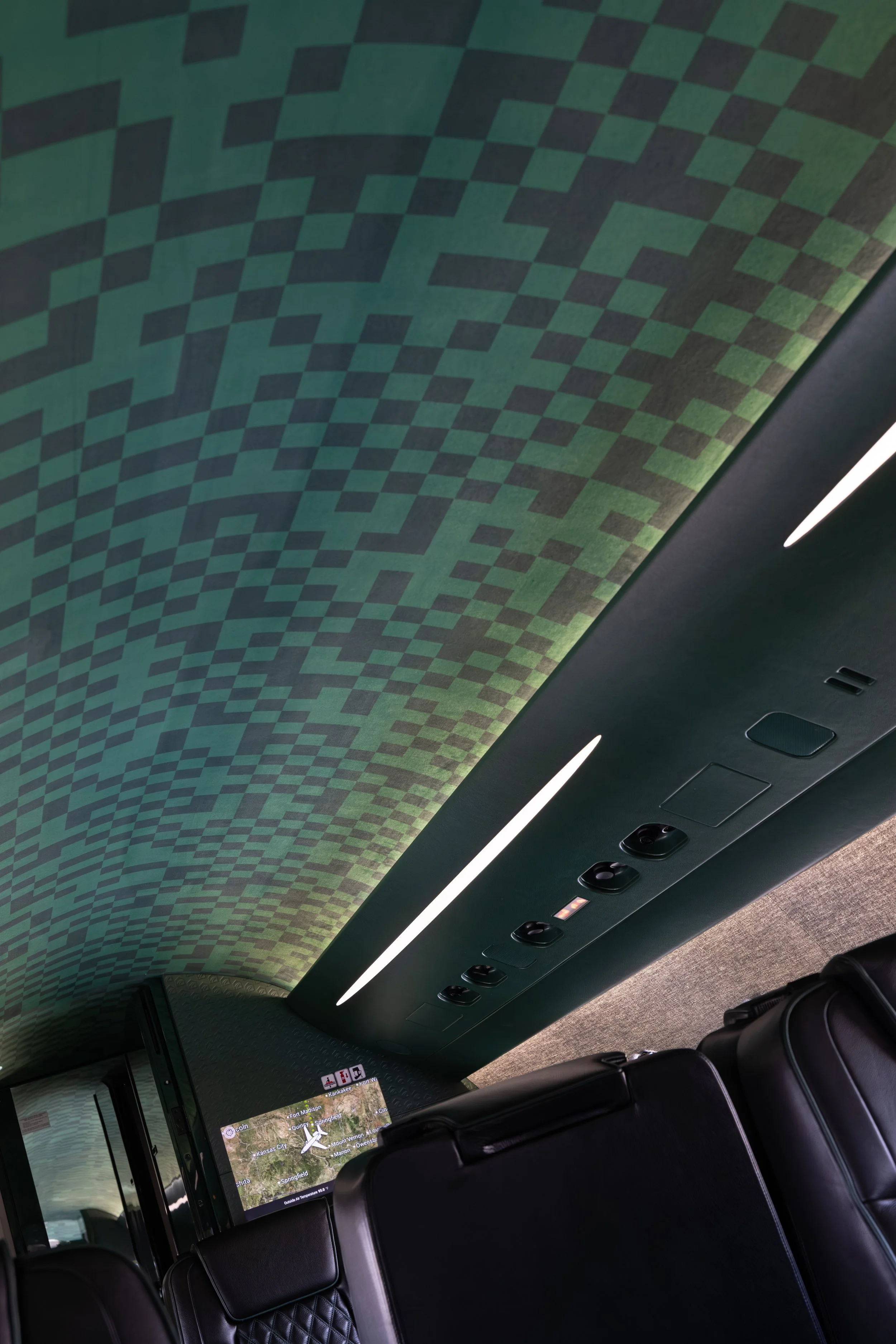

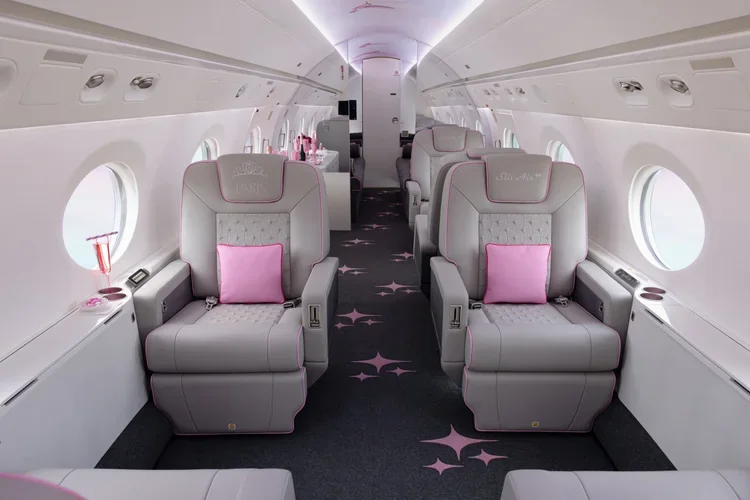
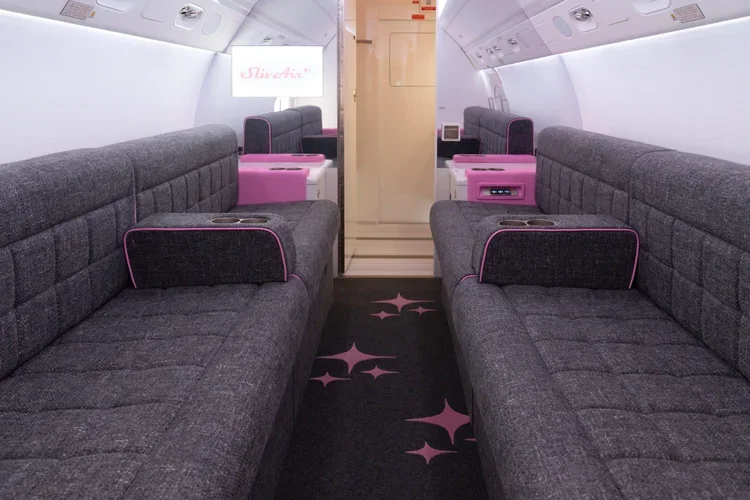
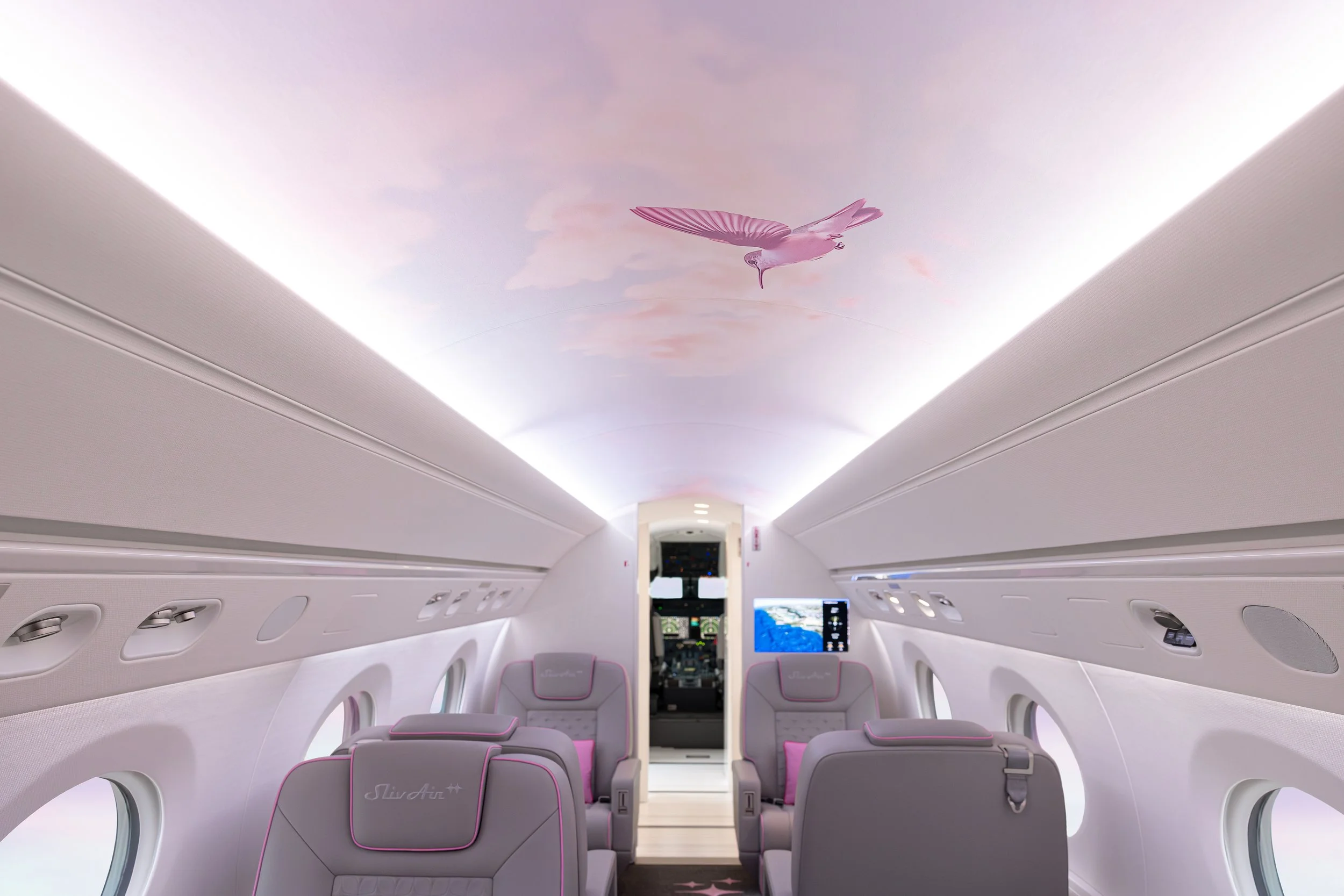
Paris Hilton’s SlivAir Gulfstream G450 shows the same approach in VIP private jet design. Standard Aero in Springfield, Illinois carried out the refurbishment, and the jet was taken back to the bare bones, with new in-flight entertainment among the installations.

What to take from this
The latest technology is mature enough to retrofit onto proven airframes, but only when equipment lead times, certification and the cabin’s physical design are planned together. An experienced aircraft designer like Sarah Larranaga treats the connectivity antenna, the CMS and the avionics as one program, so that an upgrade adds value instead of creating problems later.
Owners planning a technology upgrade can discuss scope and sequencing with Sarah Larranaga Aviation Design before booking installation slots by clicking the button below.