
The Top Materials for Custom Private Aircraft Interiors
Balancing Weight, Flammability, and Luxury
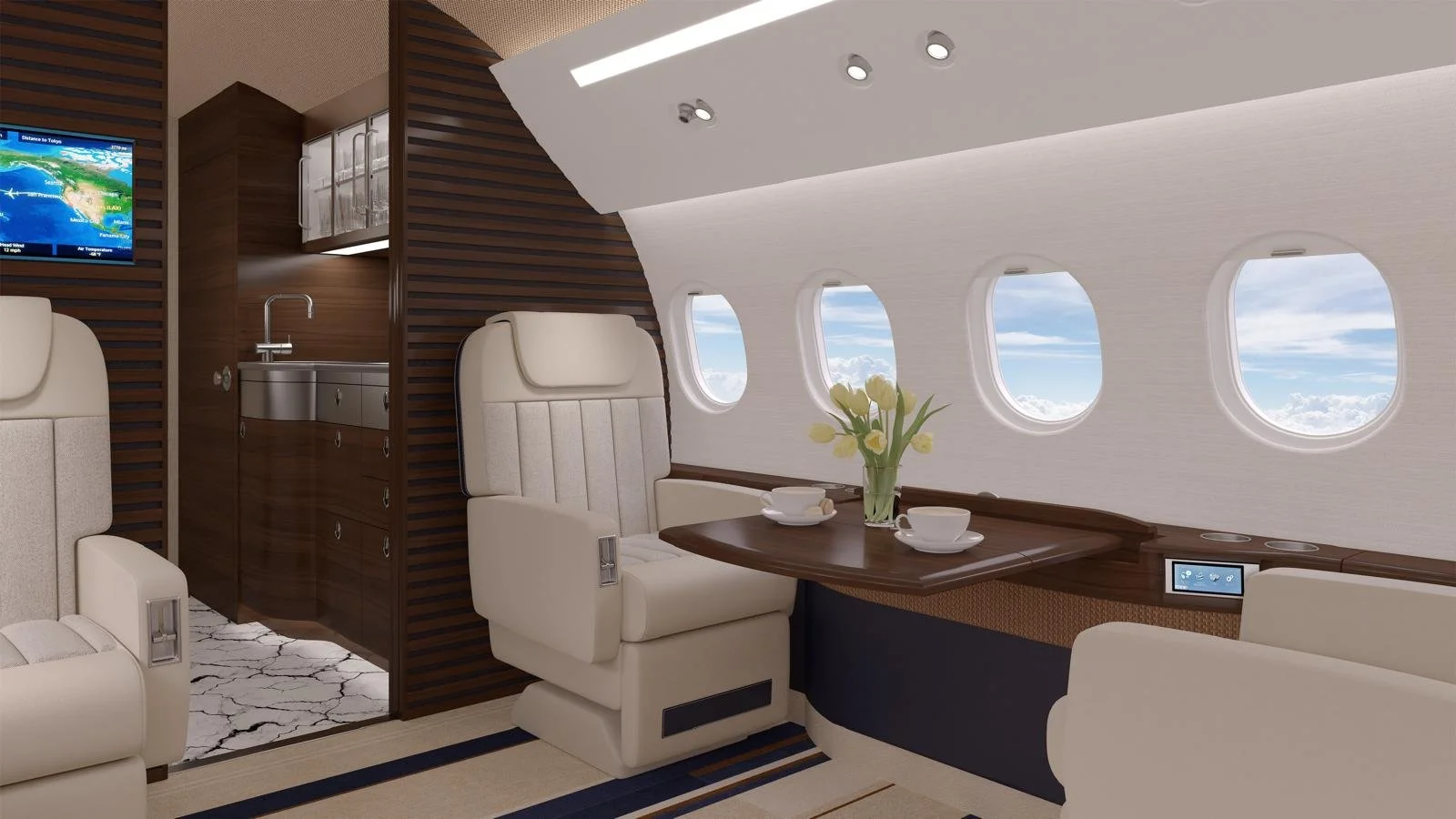
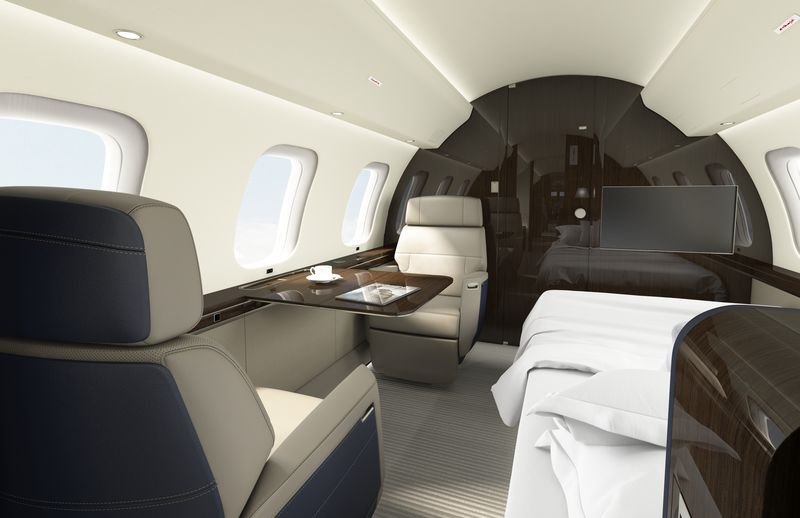
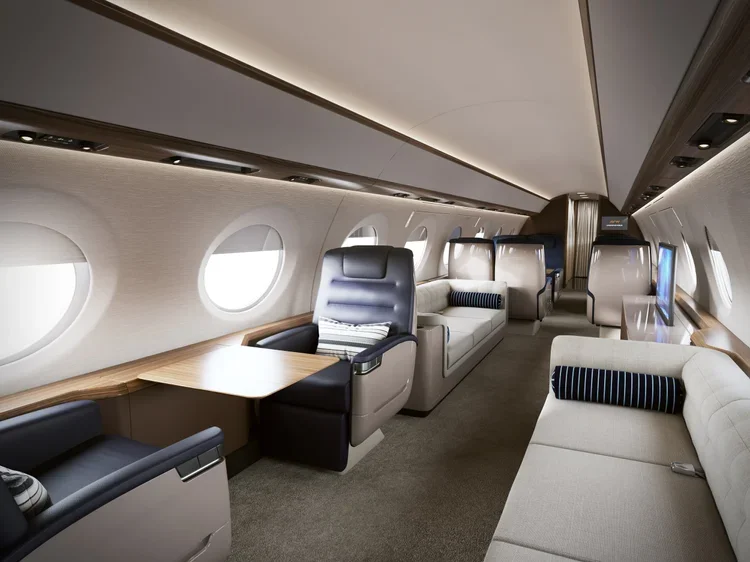
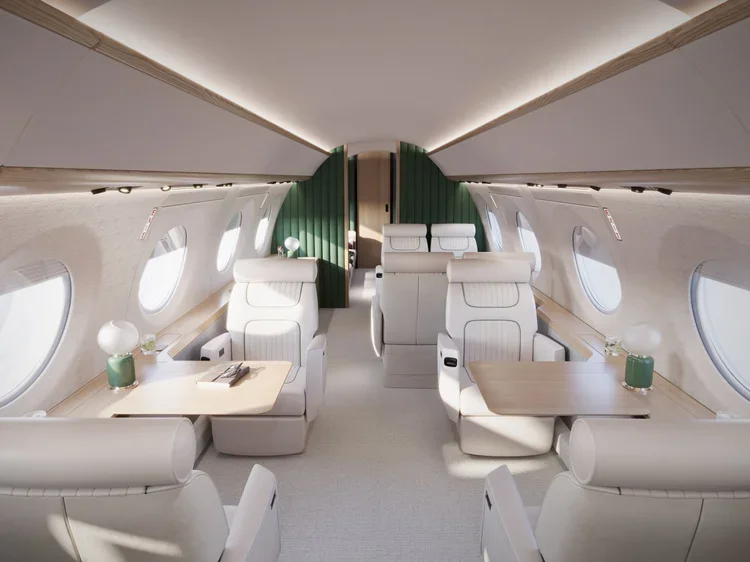
Executing a bespoke interior overhaul for a long-range executive jet requires navigating a narrow intersection between tactile luxury and regulatory engineering. While residential or marine interior designers prioritize aesthetics and tactile comfort, a top private jet designer must engineer every material selection around aircraft weight distribution, acoustic damping, and strict FAA or CAA flammability standards.
Selecting materials for VIP aircraft interiors involves far more than picking leather hides and wood veneers. Every component installed inside a cabin directly impacts payload capacity, fuel burn, and certification timelines. When evaluating materials for high-value aircraft interior refurbishment projects, elite design teams adhere to specific technical criteria across seating, flooring, cabinet surfacing, and acoustic insulation.
Aviation-Grade Upholstery: Certified Full-Grain Leathers
Standard luxury furniture leather cannot legally or safely be installed inside a transport-category aircraft. Aircraft seating requires full-grain leather that has undergone specialized flame-retardant drum-dyeing treatments to meet Title 14 CFR FAR 25.853 flammability regulations.
Under guidelines established by the Federal Aviation Administration in 2024, upholstery materials must pass a 12-second vertical burn test, exhibiting self-extinguishing properties, limited burn lengths, and zero flaming drips.
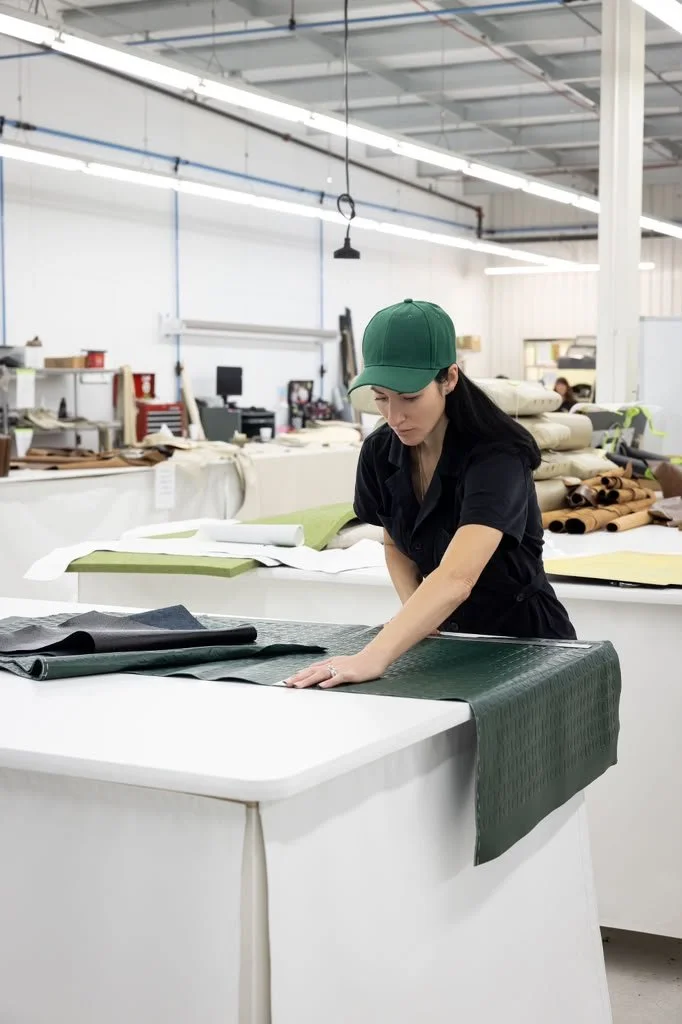
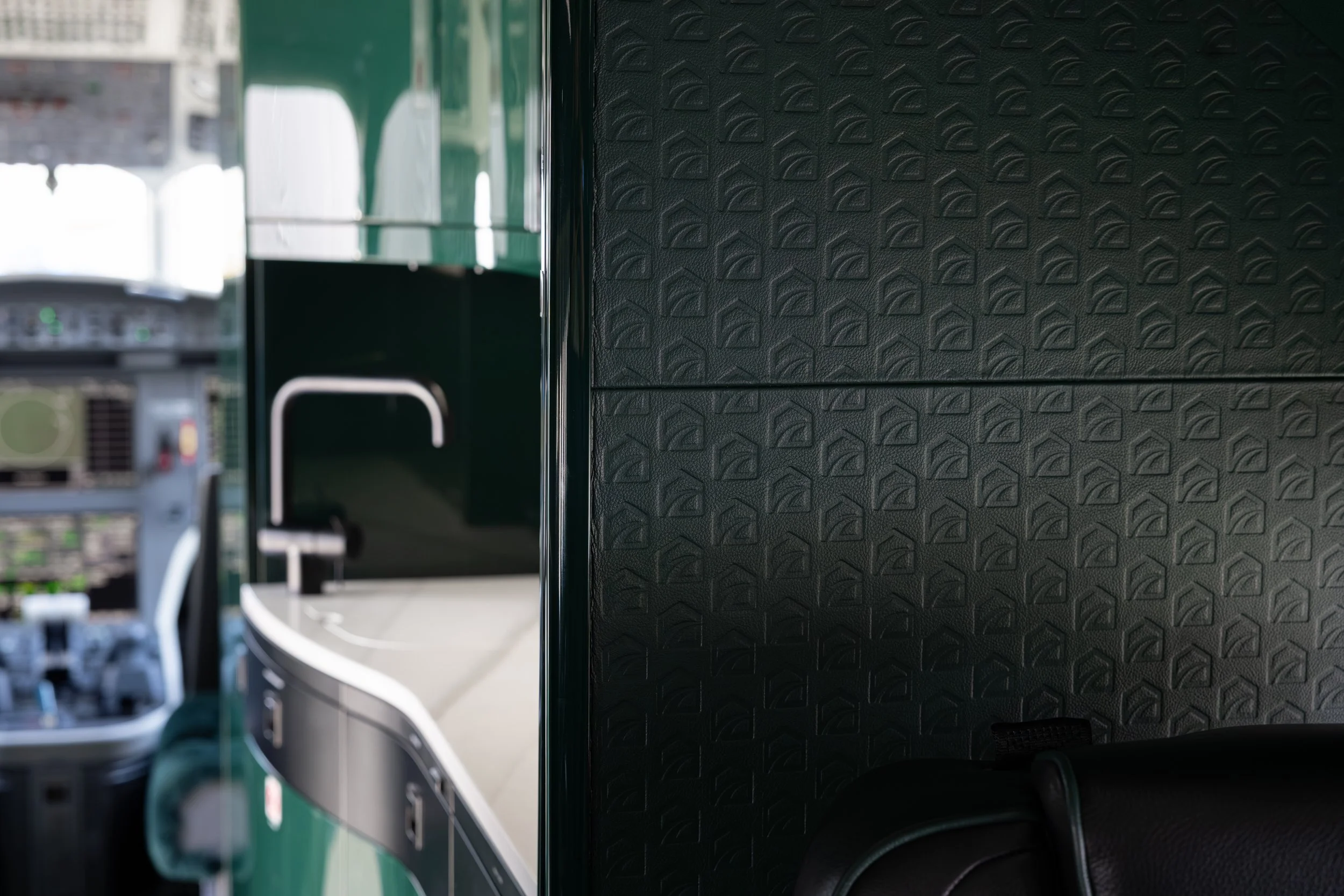
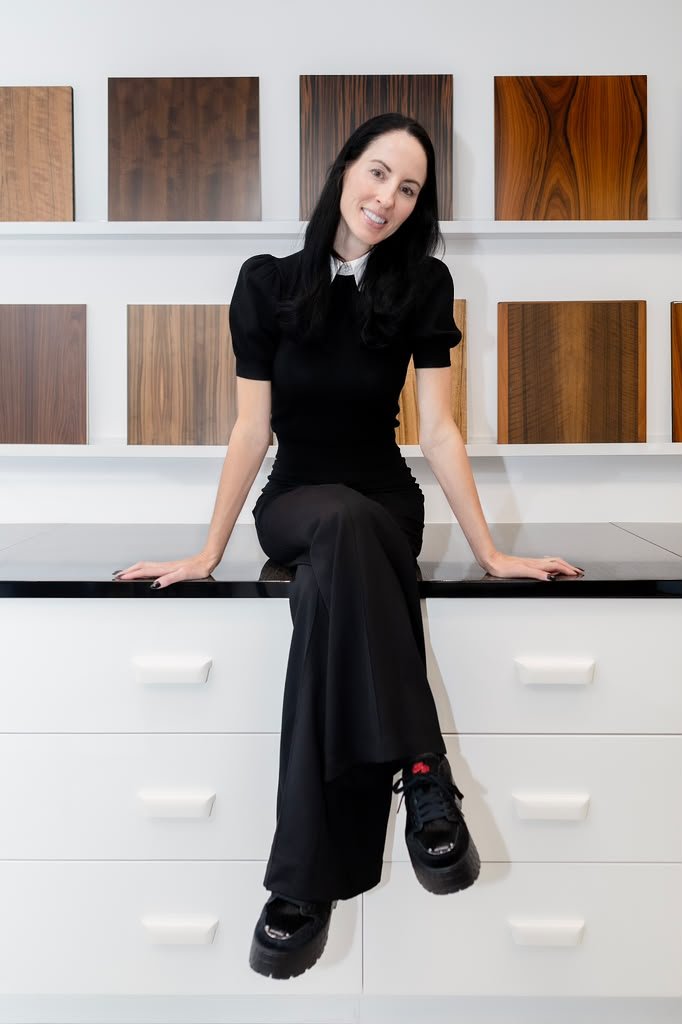
Sarah Larranaga selects leather hides with calibrated split thicknesses. Thin-splitting reduces dead weight across a 12-to-16-passenger seating layout without compromising grain strength or tearing resistance. Lightweight, high-tensile chrome-tanned leathers maintain structural elasticity over high-density foam cores, ensuring that custom seat quilting and double-needle stitching do not stretch or sag under repeated thermal cycling at altitude.
High-Density Cabin Carpet: Wool-Silk Blends and Static Control
Cabin flooring must handle foot traffic, moisture, and cabin decompression forces while contributing to cabin acoustic attenuation. The industry benchmark for high-end cabins remains 100% pure New Zealand wool or custom 80/20 wool-silk woven carpets.
As documented in Lantal Textiles Technical Specifications, wool fibers possess natural flame-retardant properties, low smoke emission profiles, and static charge suppression when combined with conductive core yarns. Pure silk accents add visual depth to custom patterns, but excessive silk content degrades carpet durability in high-wear zones such as the galley and main cabin entryway.
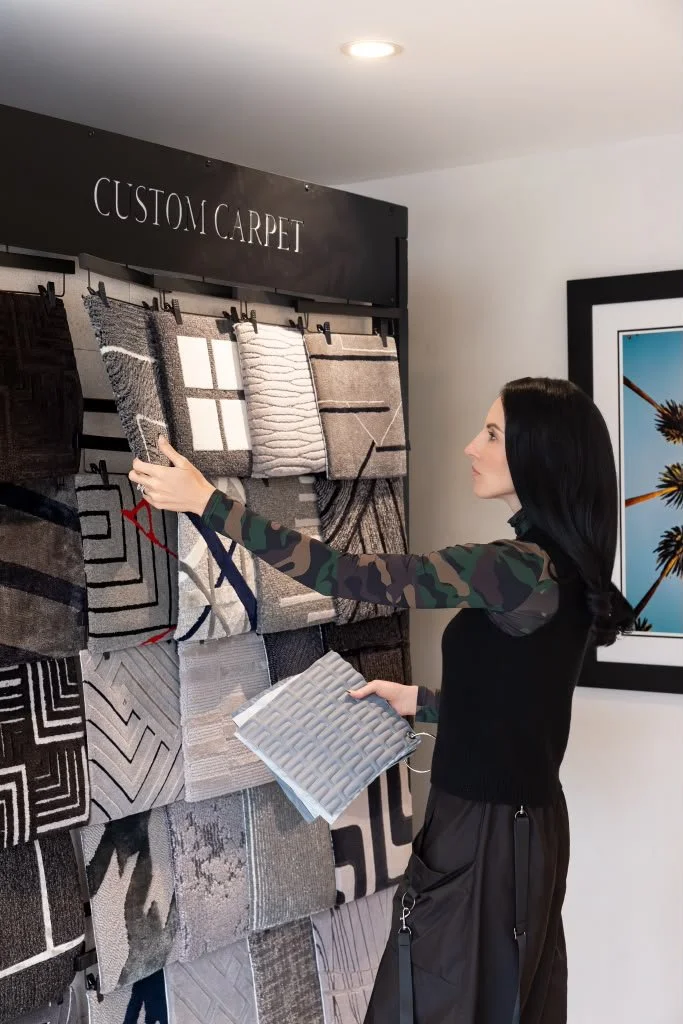
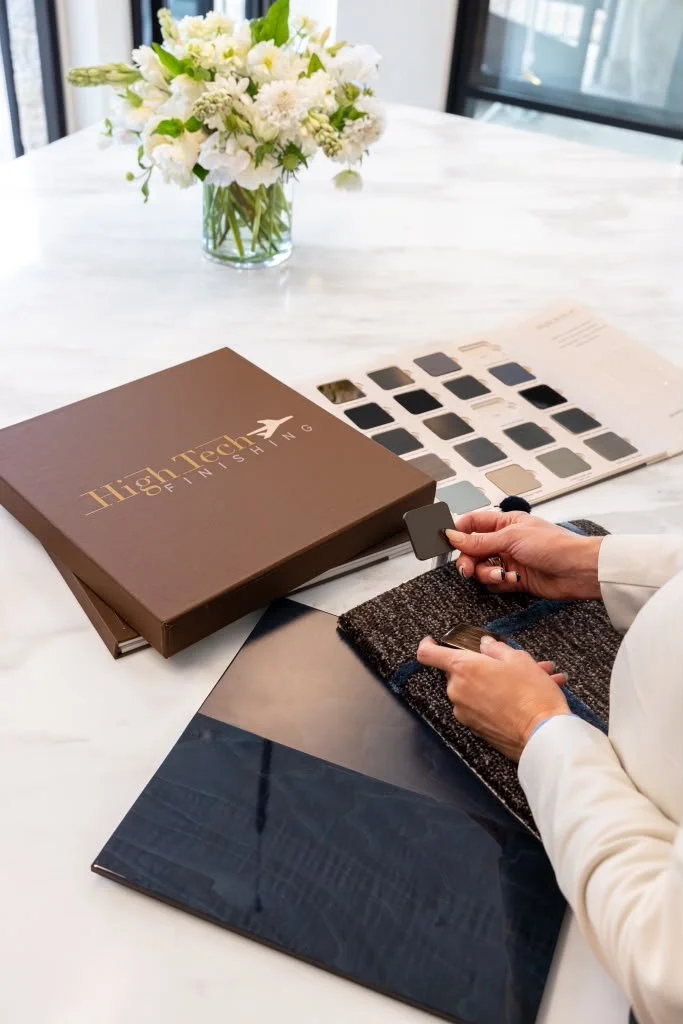
To maximize lifespan and maintain certification compliance, teams prioritize specific flooring stackups:
Entryways and Galleys: High-density, short-loop pile wool carpets or composite woven vinyl threshold plates.
Main Seating Zones: Hand-tufted, cut-pile wool and silk blends with integrated anti-static backing.
Acoustic Sublay: Flame-retardant closed-cell silicone foam pads installed beneath the carpet to absorb low-frequency engine resonance.
Ultra-Lightweight Cabinetry Veneers and Stone Surfaces
Traditional solid hardwood and natural stone slabs are unusable in modern VIP aircraft interiors due to weight restrictions and flammability parameters. Achieving a rich, bespoke cabin finish requires engineered wood veneers applied over aluminum honeycomb or Nomex composite structures.
According to technical research by Global Plastic Sheeting, interior bulkhead panels and cabinetry substrate assemblies must comply with 60-second vertical burn tests under FAR 25.853(a). Sarah Larranaga leverages lightweight composite engineering to apply rare wood species as micro-thin veneers measured in fractions of a millimeter.
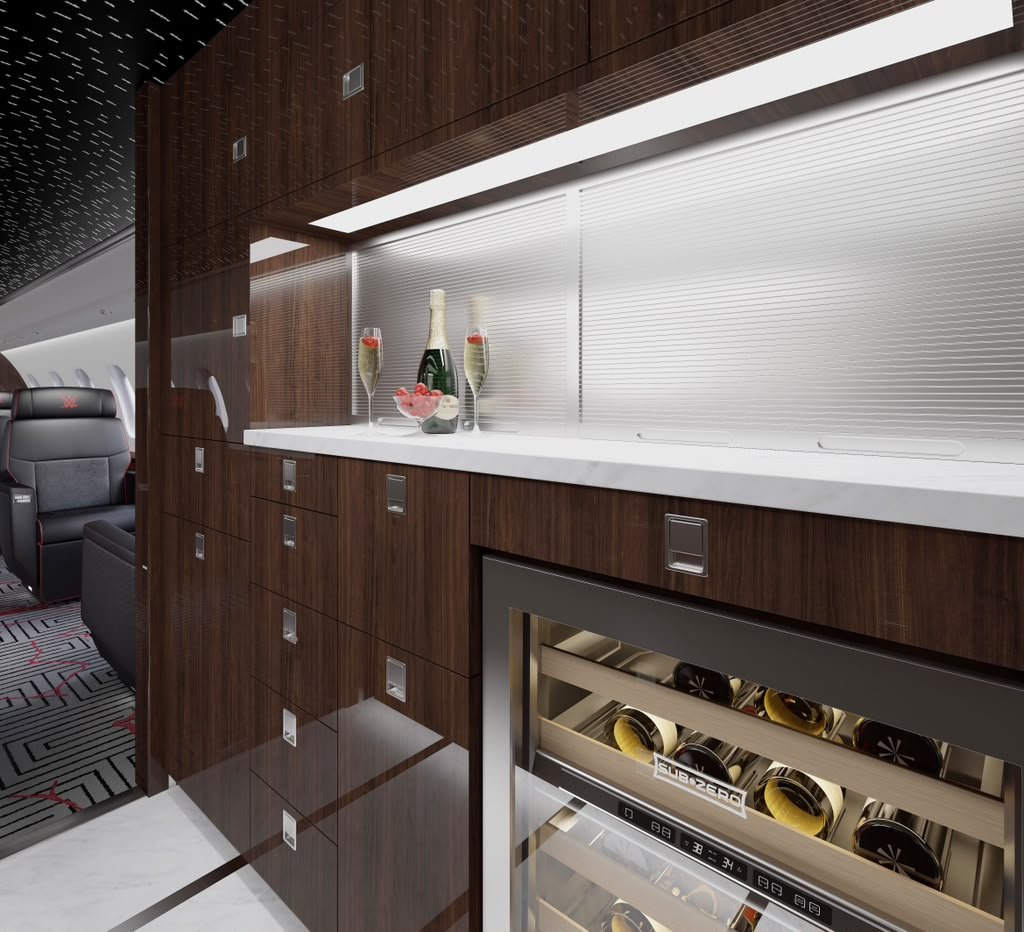
For lavatories and galley countertops, authentic granite or marble is replaced with lightweight natural stone veneers—thin slices of real stone bonded to a lightweight aluminum honeycomb backing. This method delivers the luxury of natural stone at less than one-third the total weight, maintaining critical flight center-of-gravity calculations.
Synthetic Sidewalls and Headliners: Technical Microfibers
Upper cabin walls and headliners require flexible, lightweight materials that resist yellowing, UV degradation, and sound reflection. Specialized synthetic microfibers, such as Ultraleather, have replaced heavy vinyls across premium retrofits.
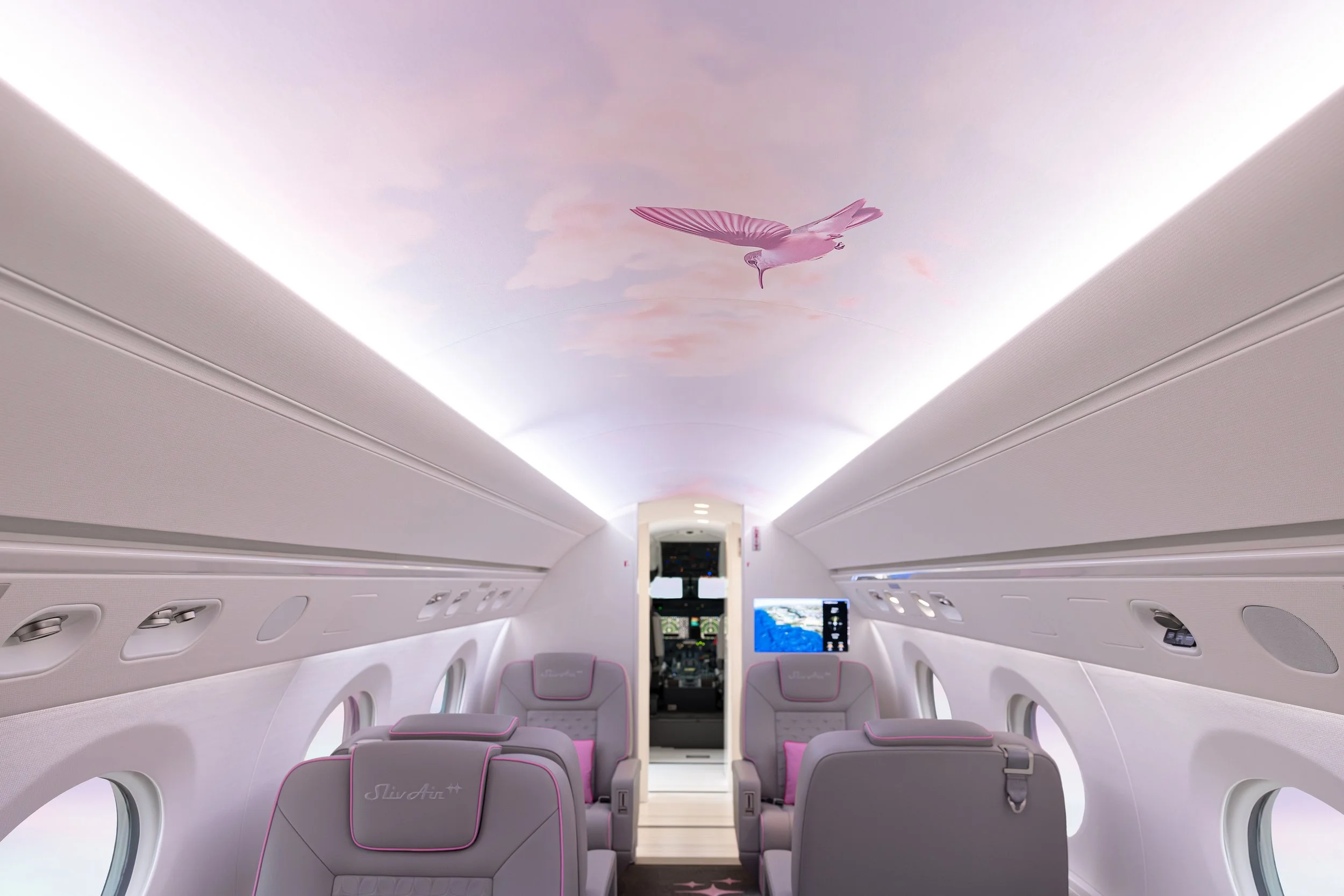
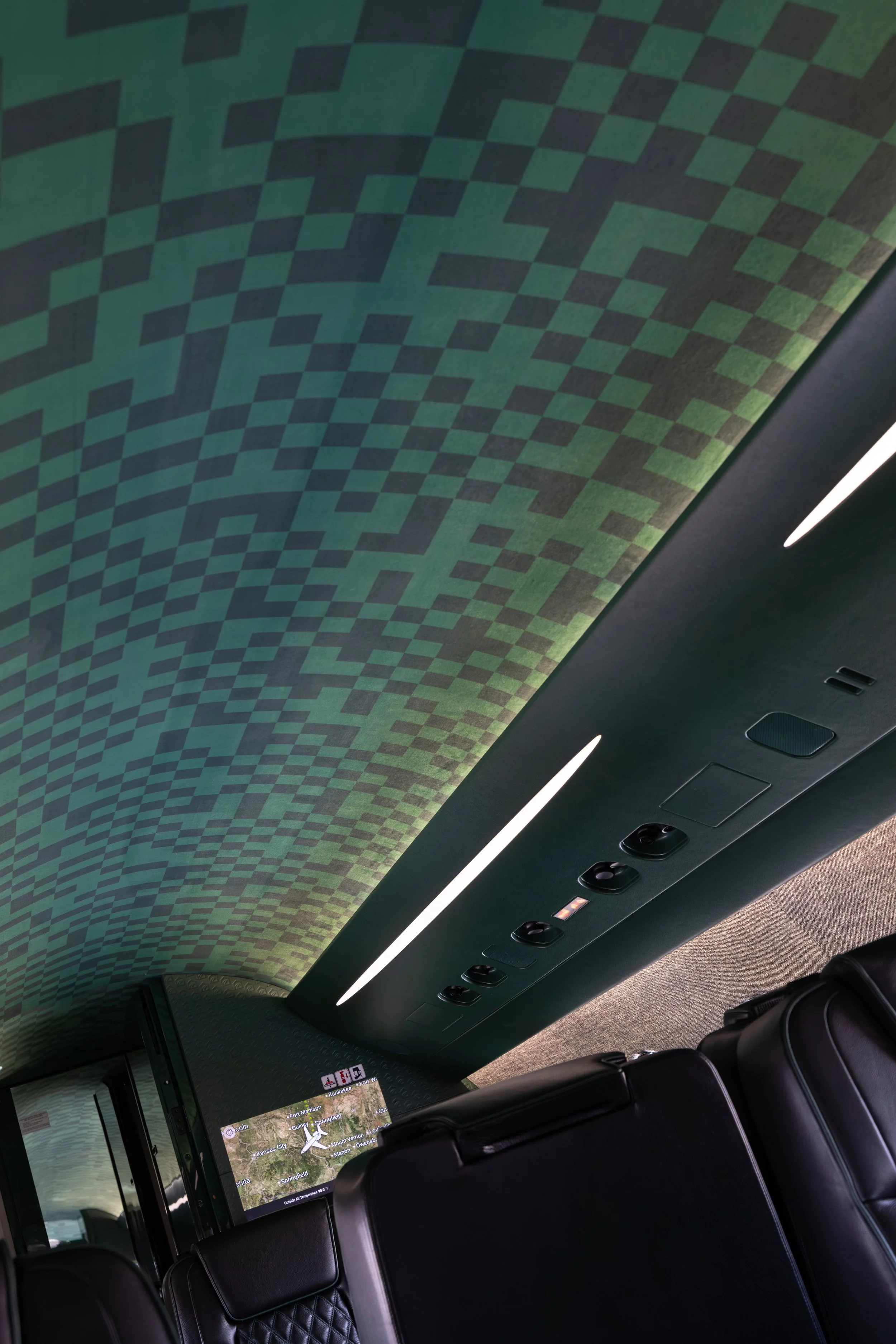
Weight Efficiency: Microfiber synthetics weigh up to 30% less than traditional leather hides.
Acoustic Control: Perforated synthetic suede panels back-lined with acoustic scrim material reduce ambient cabin noise levels by up to 3 decibels during cruise phase.
Environmental Resistance: Formulated to withstand cabin pressurization cycles and direct UV exposure through cabin windows without cracking or off-gassing.
Precision Engineering Meets Bespoke Styling
Selecting the correct cabin materials is an exercise in technical discipline. A successful refurbishment requires an intimate knowledge of aviation burn certifications, weight dynamics, and material longevity. Sarah Larranaga’s design engineering bridges the gap between complex airworthiness mandates and uncompromising luxury aesthetic execution, delivering cabin interiors engineered for both regulatory compliance and long-term asset value retention.
Planning an upcoming cabin refurbishment or asset conversion? Contact Sarah Larranaga Aviation Design to schedule a technical consultation on compliant material selection, cabin layout engineering, and turnkey interior design execution.