
Bespoke Bombardier Cabin Architecture
The Ergonomics of Ultra-Long-Range Flight
A massive operational shift is sweeping through business aviation. Following the landmark entry into service of the 8,000-nautical-mile Bombardier Global 8000 this spring, non-stop, 14 to 17 hour intercontinental flights have become the new corporate standard according to Business Airport International.
The global rollout of this platform has moved quickly. Data from AIN says fractional fleet launch customer NetJets, which manages its private aviation network from its global headquarters in Columbus, Ohio, and its European base in Lisbon, Portugal, took delivery of its first Global 8000 units at Bombardier’s completion center in Montreal this March. Meanwhile, in East Asia, the region’s very first managed Global 8000 arrived in Hong Kong in June 2026, integrated directly into the managed fleet of local business aviation operator Metrojet on behalf of a regional owner.

Traveling at Mach 0.95 across multiple time zones subjects the human body to extreme physiological strain. For cross-border executives and ultra-high-net-worth individuals, arriving depleted is an operational failure. To combat this, modern cabins require a highly advanced approach to biological optimization.
Building on the full-spectrum design philosophies proven in her flagship Bombardier Global 7500 collaboration with Christopher Nobles, top private jet designer Sarah Larranaga develops bespoke spaces that treat human performance as a critical design metric, fusing luxury with technical engineering precision.
Bespoke Spatial Architecture: Personalizing Spaces
An ultra-long-range cabin cannot be treated as a rigid, unyielding template. While the Bombardier platform offers the physical volume for four distinct zones, a truly bespoke design reflects the unique lifestyle and operational workflow of the principal. Different clients require entirely different spatial dynamics.
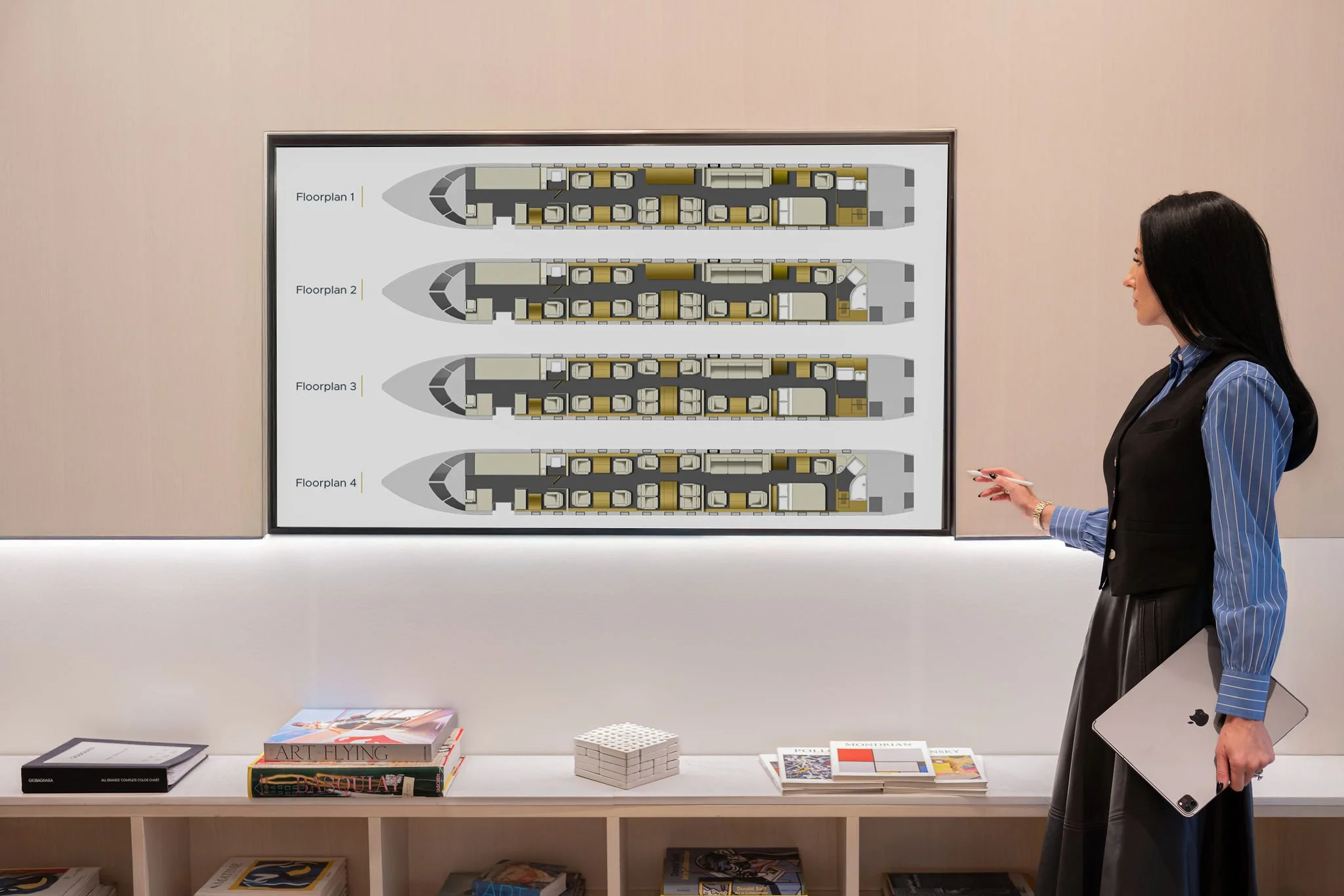
In the flagship Global 7500 collaboration with Christopher Nobles, Sarah moved completely away from standard factory configurations to engineer a highly customized, mission-specific layout across four tailored environments:


The Airborne Office: A front cabin optimized for large team briefings, featuring six custom seats facing one another across expansive, integrated central tables to maximize active strategic alignment.
The Working Station: A distinct, widely spaced four-seat club configuration with enlarged center tables, offering principals an unconfined space for intimate high-level negotiations, dining, or deep focus.
The Sanctuary: A deeply private, certified master suite featuring a full-size bed installation engineered to comply with strict airworthiness rules while offering uninterrupted sleep cycles across multiple time zones.
The Aft Rest Station: A versatile aft space balancing an elegant bench installation with individual seating, purposefully arranged to accommodate support staff, security teams, or flight crew members during extended stage lengths.
Bio-Environmental Engineering: Defeating Jet Lag at 45,000 Feet
True cabin comfort relies on managing environmental metrics that are invisible to the eye but deeply felt by the body. Sarah Larranaga’s engineering-first methodology focuses heavily on micro-environments to reduce the physical toll of high-speed travel:
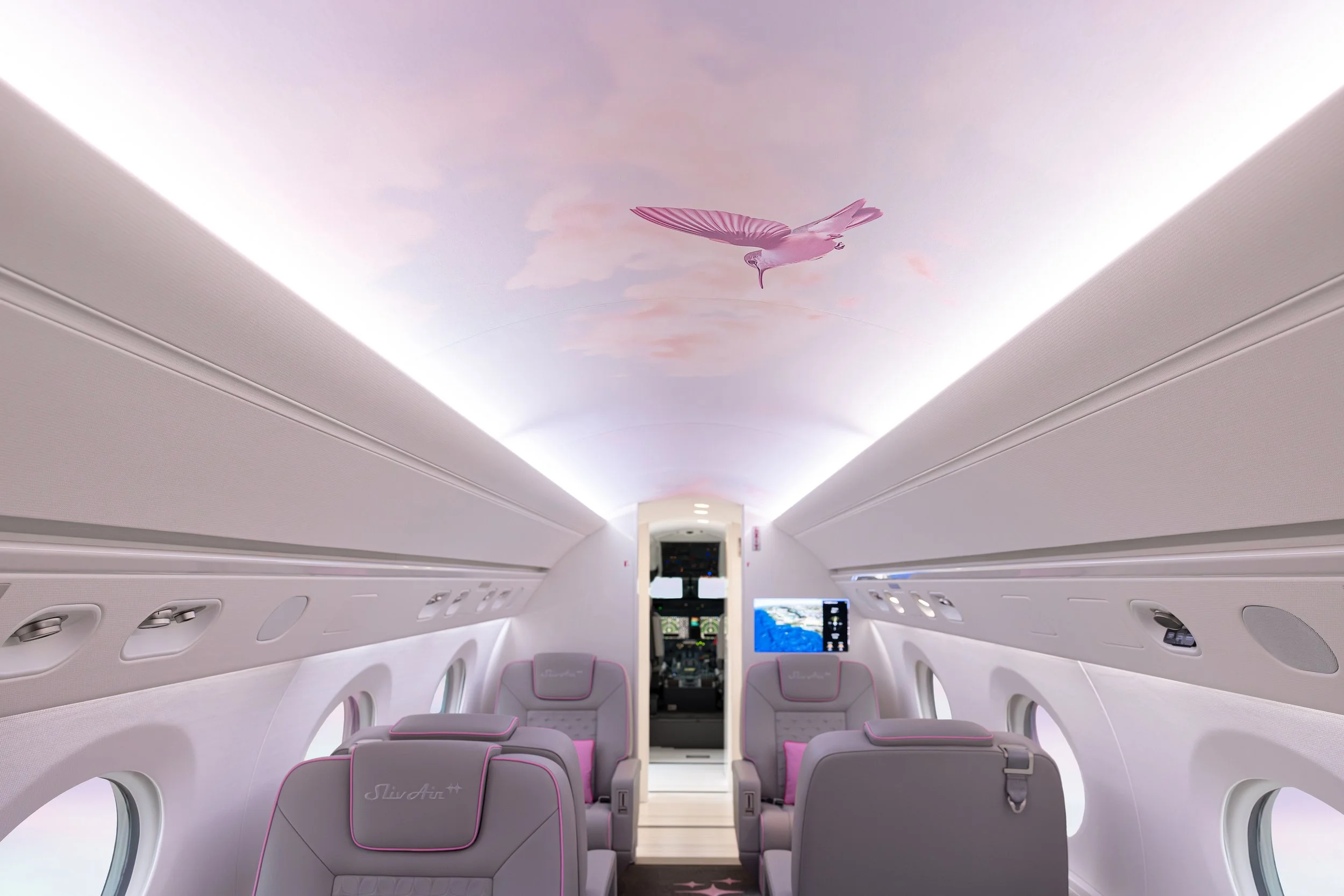
Dynamic Circadian Lighting: Instead of static illumination, automated LED arrays are fully integrated into the architecture. These systems gradually alter color spectra and intensity to match the destination's time zone, suppressing daytime cortisol production and prompting natural melatonin release before arrival.
Acoustic Decibel Suppression: Long-haul exhaustion is heavily driven by the constant background hum of the airframe. By utilizing specialized, lightweight sound insulation matrices behind custom cabin liners, Sarah drops interior decibel levels to allow for effortless conversation and deeper sleep states.
Pressurization and Air Management: Advanced cabins operate alongside the aircraft’s environmental control systems to manage clean airflow. By aligning custom interior geometries with low cabin altitude systems, which maintain a pressure equivalent of under 3,000 feet even at high cruise altitudes, the layout helps optimize passenger blood oxygen saturation and reduces the classic symptoms of dehydration and jet lag.
Technical Certainty via Aviation Project Management
Translating a data-driven, four-zone cabin from a high-concept identity into a certified reality demands flawless technical oversight. Every structural modification, lightweight partition wall, and custom material selection alters the aircraft’s center of gravity and final payload. In ultra-long-range missions, every pound of excess cabin weight directly reduces maximum fuel capacity and final range.
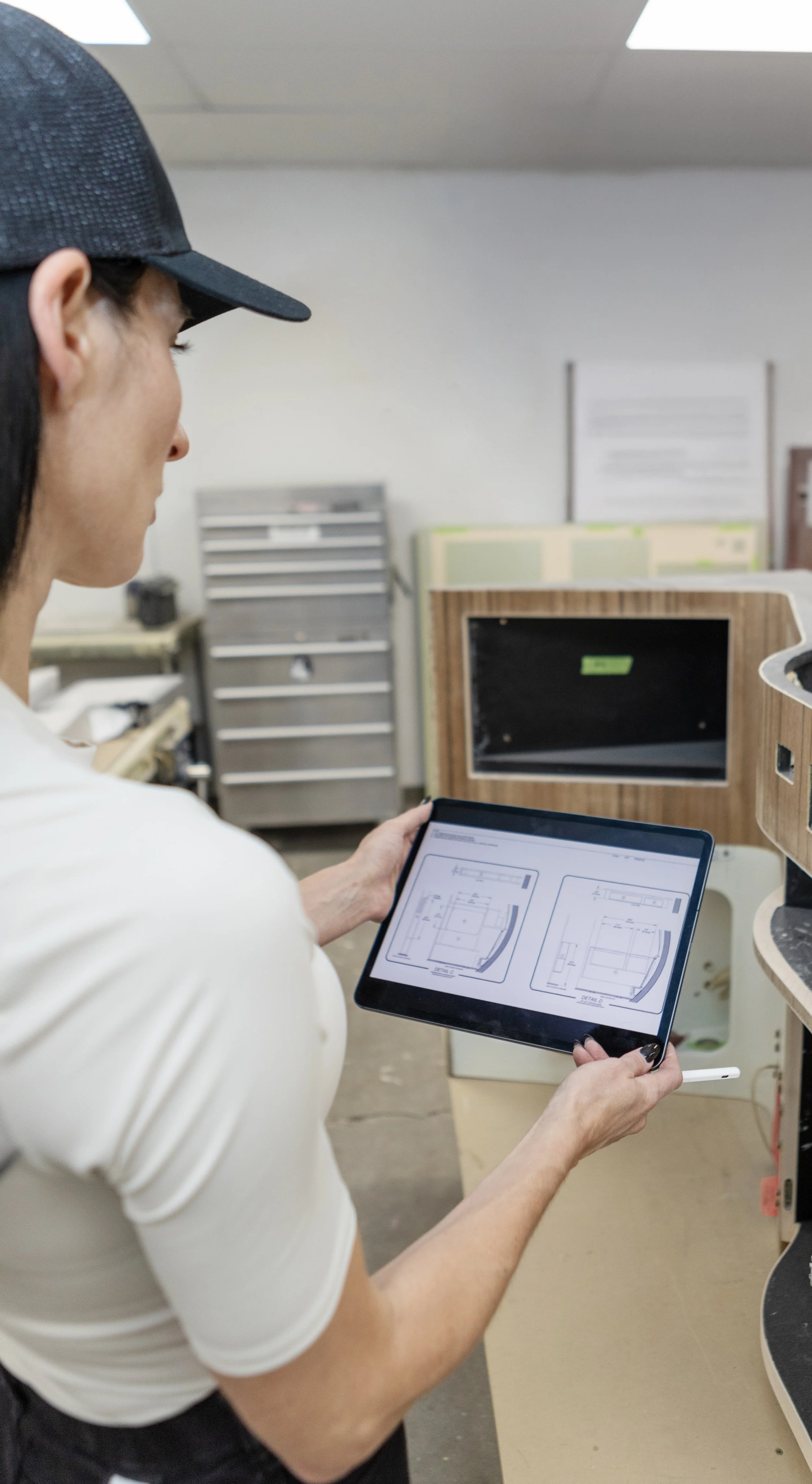
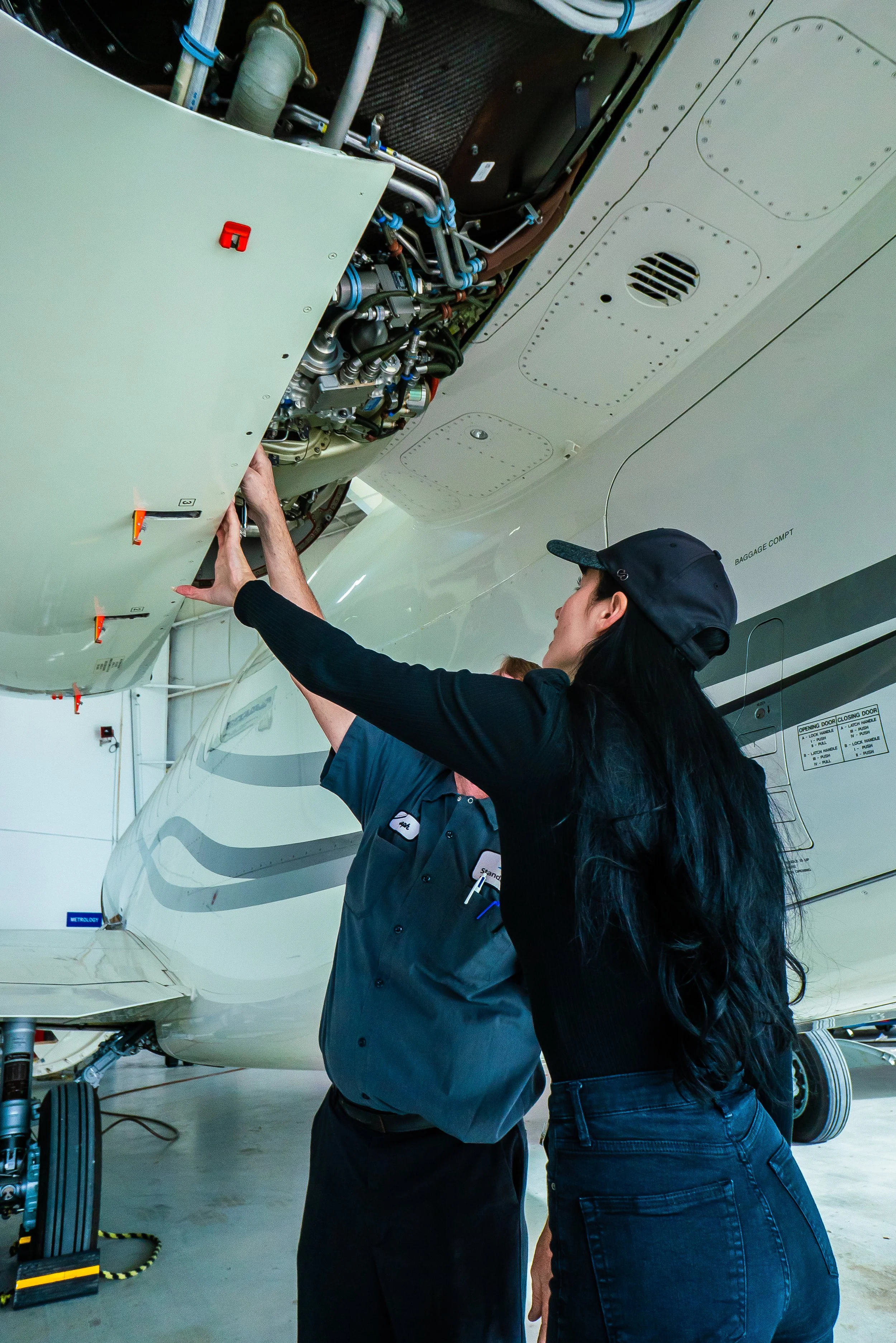
Through meticulous aviation project management, Sarah Larranaga oversees the complex engineering approvals required by regulatory bodies like the Civil Aviation Department (CAD). This detailed oversight ensures that every custom modification complies with international safety standards, avoiding delivery delays and keeping the aircraft on schedule. As a globally recognized private jet designer, Sarah ensures that the final asset performs flawlessly, protecting your health and your investment on every intercontinental leg.