
Move Beyond “Standard White”: Designing Aircraft Exteriors That Speak Before You Do
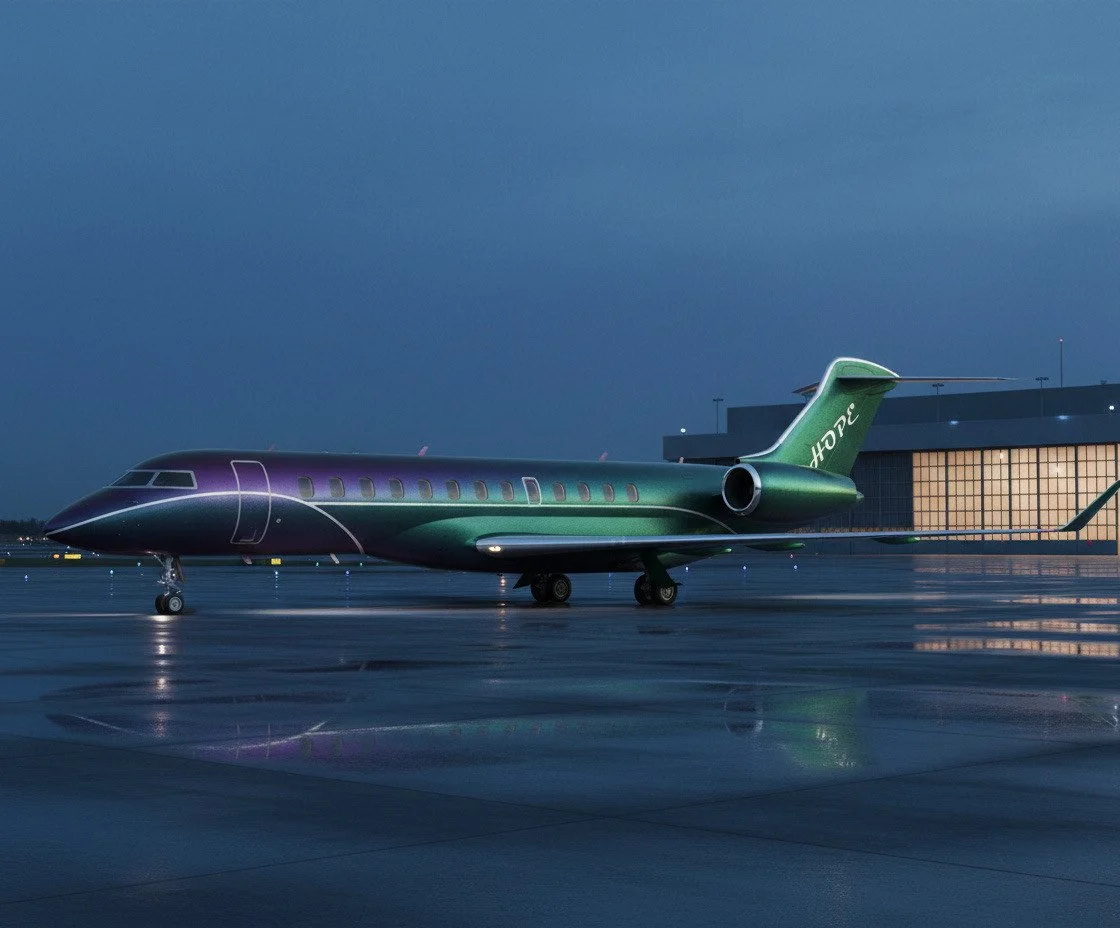
Walk any tarmac and you’ll see it: rows of aircraft finished in near-identical white, looking clean, safe, and conventional. It has become the default.
But default isn’t the same as intentional.
For aircraft owners, fleet operators, and global brands investing heavily in cabin interiors, the exterior is often treated as an afterthought. Yet it remains the primary visual impression. Long before a passenger steps onboard, the aircraft communicates something about the operation, the brand, and the level of care behind it.
The question is simple: what is your aircraft saying?
Exterior Styling as Strategic Brand Positioning
An aircraft livery is far more than paint. It is a immediate visual signal.
For corporate operators, exterior styling reflects brand clarity and organizational consistency. For private owners working with a top private jet designer, it expresses identity with restraint and sophistication. For charter fleets, deliberate exterior design differentiates aircraft in a crowded market where offerings often look identical.
Executing high-level private jet design communicates confidence. It demonstrates that every design choice is deliberate, never defaulted.
Why “White” Became the Standard—and When to Challenge It
There are practical reasons white became dominant: heat reflection, ease of maintenance, and residual value considerations. These technical realities remain critical.
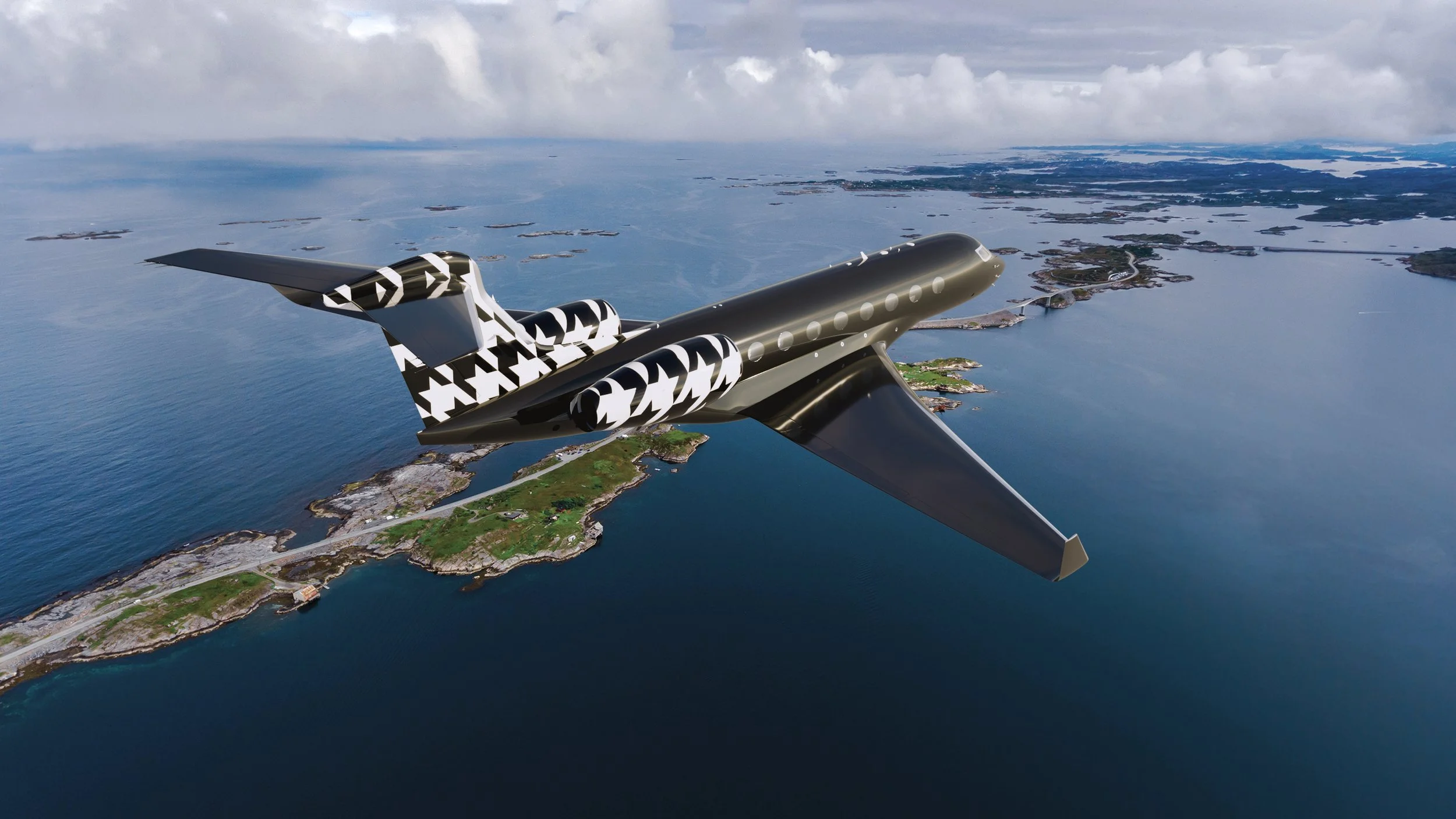
However, modern aerospace coatings and strategic design methodologies offer far greater flexibility without compromising performance, airworthiness, or longevity. Moving beyond standard white does not require abandoning it entirely. Often, the most compelling work by a private jet designer uses white as a foundational canvas, layered with subtle graphics, tonal shifts, or precise accents that elevate rather than overpower.
It is not about being loud. It is about being considered.
Designing for the Tarmac Environment
Aircraft exteriors exist in a specific operational environment characterized by harsh sunlight, long viewing distances, constant motion, and strict regulatory standards.
What looks striking on a digital render can distort or disappear on the ramp. This is where technical design discipline matters. Proportion, scale, color behavior, and line continuity across complex aerodynamic surfaces must be resolved with absolute precision. Every curve of the fuselage, door break, and panel line forms part of the composition.
The goal is not surface decoration. It is complete visual coherence.
Technical Oversight: Bridging Design and Hangar Execution
Even the strongest visual concept can fail during execution. Paint facilities interpret technical drawings, manage complex masking, mix custom coatings, and apply finishes under strict timelines. Without direct design oversight, minor deviations compound quickly: graphic lines shift, color tones drift, and key details are simplified.
The work of a private jet designer does not end at concept approval; it continues through physical application. Expert aircraft completion management ensures that the design approved on paper matches what leaves the hangar, protecting the owner's investment and maintaining strict alignment with FAA/CAD standards through every phase of the technical process.
A Statement Before the Cabin Door Opens
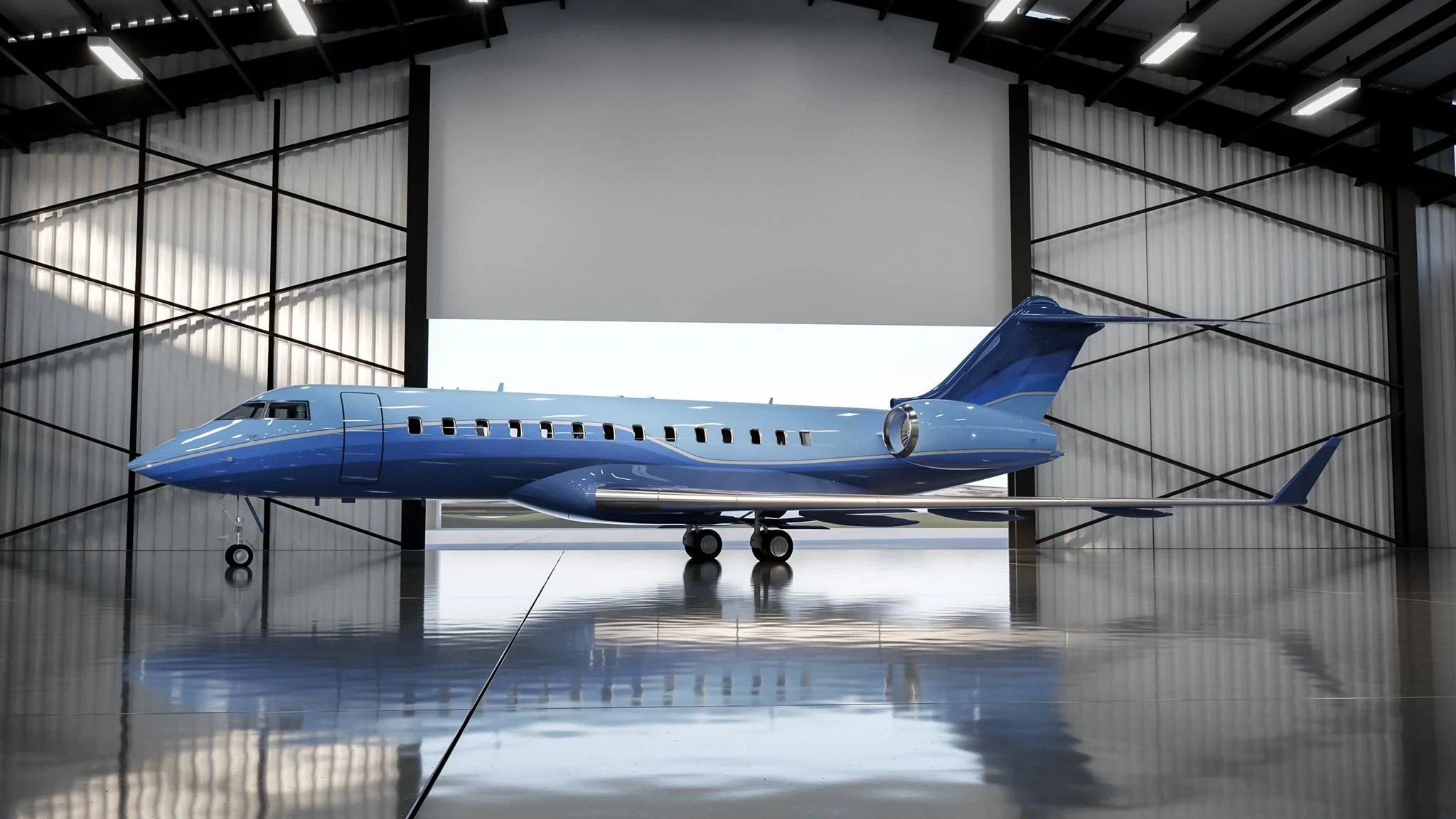
Before the cabin, the hand-stitched leather, and the interior experience, there is a distinct moment on the tarmac. The aircraft is viewed from a distance, photographed, and remembered.
Moving beyond standard white aligns the exterior with the same level of intention invested in the rest of the aircraft. The travel experience does not start at the cabin door. It starts the moment the aircraft comes into view.