
Bombardier Global 7500 Cabin Customization
A Design Case Study in Private Plane Interiors
In modern business aviation, the aircraft cabin has become far more than a passenger space. It is a carefully designed environment where engineering, comfort, and personal identity converge.
Few aircraft illustrate this better than the Bombardier Global 7500, whose long-range capability and spacious cabin architecture offer designers extraordinary creative freedom.
For aviation designer and engineer Sarah Mespelt Larranaga, this aircraft represents a remarkable opportunity: to transform a highly engineered machine into a living space that feels refined, intuitive, and deeply personal.
This case study explores the principles behind Bombardier G7500 cabin customization, and how thoughtful design reshapes the experience of long-range travel.
Understanding the Bombardier Global 7500 Cabin
The Global 7500 is one of the most advanced business jets in operation today.
What sets it apart is not only its range but also its cabin architecture. The aircraft allows designers to create multiple living zones that support different passenger activities during ultra-long-range flights.
A typical Global 7500 interior configuration may include:
• forward lounge or reception area
• dining or conference space
• private entertainment lounge
• full sleeping suite
• crew rest or wellness area
The design challenge lies in creating seamless transitions between these spaces so the cabin feels cohesive rather than compartmentalized.
When executed well, the aircraft interior begins to resemble a private residence in the sky.
Design Objective: Creating a Cohesive Cabin Environment
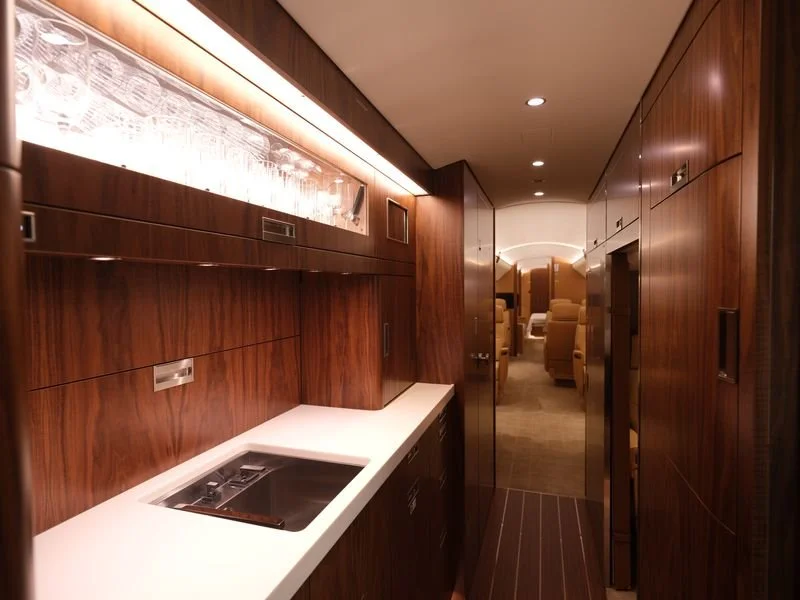
In luxury aviation interiors, aesthetics must work in harmony with engineering.
A successful private jet interior design must address several technical constraints:
strict aircraft weight limitations
structural attachment points
fire and safety certification requirements
vibration and acoustic considerations
For this reason, cabin customization requires close collaboration between designers, engineers, and aircraft completion centers.
According to Sarah Mespelt Larranaga, the goal is always to make the engineering invisible.
“Passengers should experience the cabin as a calm and effortless environment. Behind that simplicity is an enormous amount of technical coordination.”
Cabin Zoning: Designing Spaces for Life in Motion
One of the most powerful features of the Bombardier Global 7500 is its ability to support clearly defined cabin zones.
Each zone serves a different function during long-range travel.
The Lounge
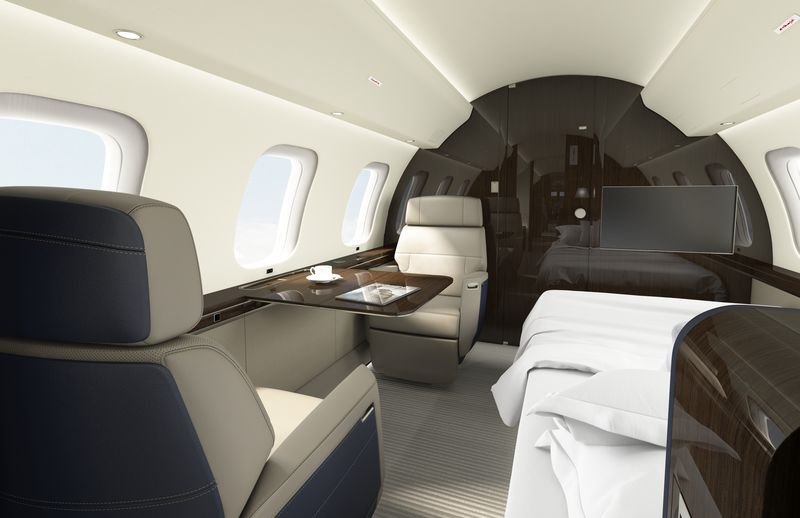
The forward lounge typically serves as a welcoming environment where passengers can converse, relax, or begin meetings.
Design elements often include:
sculpted seating arrangements
integrated lighting environments
elegant cabinetry and storage
The objective is to create a space that feels open and social while maintaining privacy.
The Dining or Conference Area
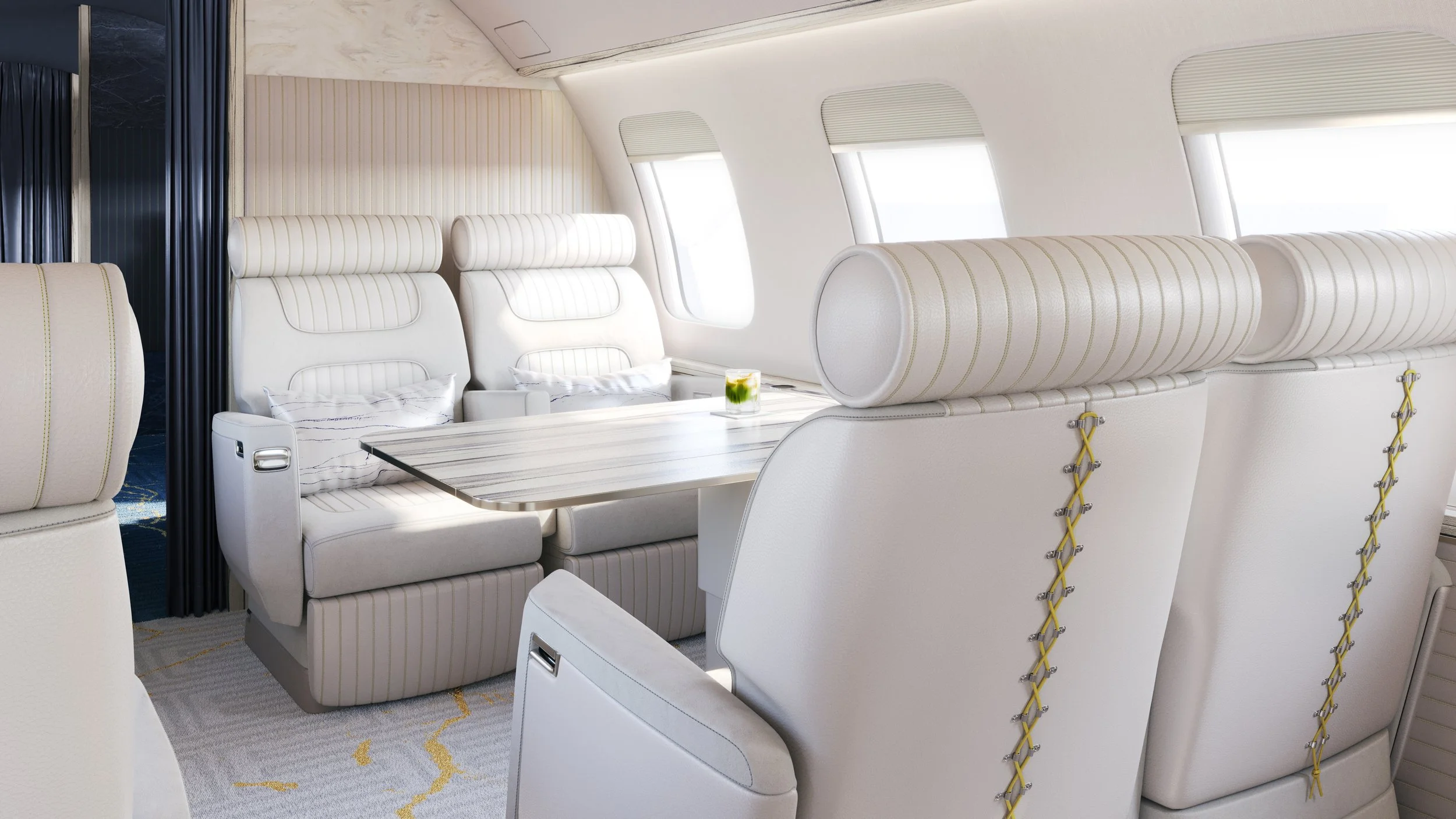
Image credit: Sarah Larranaga & Christopher Nobles
Many aircraft owners use their jet as a mobile workspace.
A well-designed dining or conference zone allows passengers to host meetings, work comfortably, or enjoy meals during long flights.
Design considerations include:
flexible seating arrangements
integrated table mechanisms
discreet technology integration
The space must function equally well as a professional environment or a social gathering area.
The Private Suite
For ultra-long-range flights, rest becomes essential.
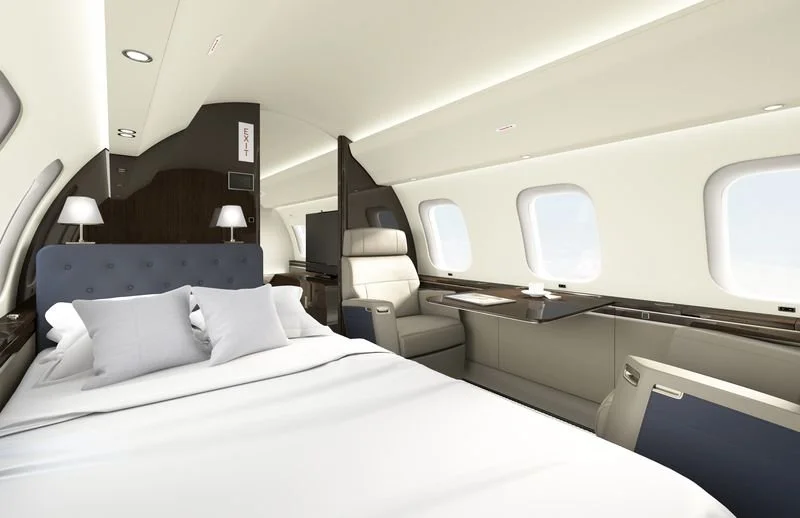
The private suite of a Bombardier Global 7500 cabin often includes:
a full sleeping arrangement
soft lighting environments
acoustic insulation for quiet rest
Designers focus on creating a space that feels peaceful and removed from the activity of the rest of the cabin.
Materials and Craftsmanship
Luxury aviation interiors rely on materials that combine elegance with performance.
In a typical private plane interior customization project, designers may use:
lightweight composite cabinetry
carbon fiber structural elements
engineered wood veneers
thin stone surface
hand-stitched leather seating
Every material must meet aviation certification standards while maintaining visual sophistication.
Weight efficiency is always a central concern.
Smart Cabin Technology
Technology is becoming an essential component of modern private jet interiors.

Cabins now incorporate advanced control systems that allow passengers to adjust lighting, temperature, and entertainment settings instantly.
Innovations developed by companies such as Honeywell Aerospace enable intelligent cabin environments where multiple systems work together seamlessly.
These technologies are especially valuable on long flights where passenger comfort depends on subtle environmental adjustments.
The Role of Refurbishment in Global 7500 Interiors
Not all aircraft customization happens during initial completion.
Many aircraft owners undertake interior refurbishment projects to modernize existing cabins or adapt them to new travel needs.
Refurbishment may involve:
new seating configurations
upgraded lighting systems
updated materials and finishes
improved acoustics
redesigned cabin zones
When thoughtfully executed, refurbishment can transform an aircraft interior into an entirely new environment.
The Power of Personalization
Perhaps the most exciting aspect of Bombardier G7500 cabin customization is the ability to create spaces that reflect the owner’s personality.
Some owners prefer cabins that resemble modern residences.
Others request interiors inspired by yachts, luxury hotels, or minimalist design philosophies.
Customization options may include:
• bespoke cabinetry and furniture
• personalized lighting schemes
• curated material palettes
• wellness-oriented cabin environments
No two aircraft interiors are ever identical.
Each project becomes a unique design story.
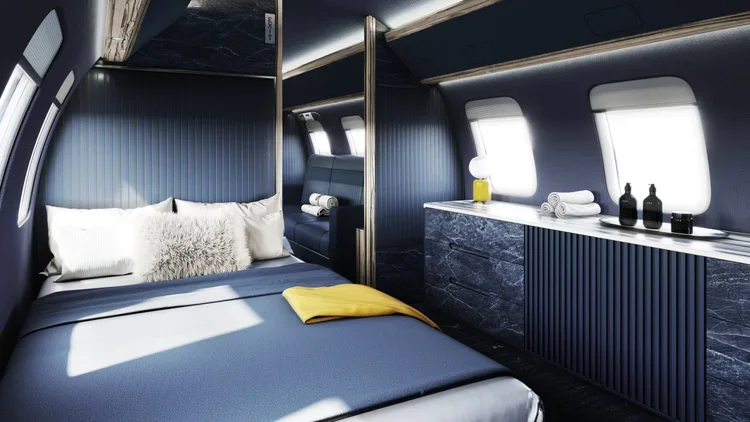
Image credit: Sarah Larranaga & Christopher Nobles
A New Era of Private Plane Interiors
The evolution of private aviation has brought a renewed focus to cabin design.
Aircraft such as the Bombardier Global 7500 allow designers and engineers to create environments that go far beyond traditional aircraft interiors.
For professionals like Sarah Mespelt Larranaga, the aircraft cabin is no longer simply a passenger compartment.
It is an architectural space in motion.
A place where engineering precision, craftsmanship, and personal expression come together to redefine what luxury travel can be.