
Bespoke Helicopter Design
Engineering Luxury and Performance for Urban Mobility
While intercontinental private jets dominate cross-border travel, multi-engine turbine helicopters have emerged as the premier asset for urban, regional, and superyacht-to-shore transit. According to mid-2026 fleet metrics from Fortune Business Insights, heavy twin-engine platforms now account for over 66% of the VIP vertical-lift market, valued for their mechanical redundancy and all-weather capability.
However, configuring a helicopter cabin presents brutal technical hurdles that terrestrial or fixed-wing designers rarely encounter: continuous high-frequency mechanical resonance and severe weight limitations. Approaching these aircraft without an aerospace background can severely degrade the aircraft's hover performance and fuel range.
As a top private jet designer, Sarah Larranaga applies a strict systems-thinking approach to rotary architecture, proving that elite luxury can be seamlessly engineered within the tightest structural margins.
The Physics of Sound
Unlike a private jet cruising smoothly at 45,000 feet, a helicopter operates within a continuous matrix of high-frequency structural vibrations generated by the main rotor blades, transmission mounts, and twin turbine engines.
Data from the Aviation Mechanics and Tech Association demonstrates that unmitigated mechanical vibration is the primary cause of passenger fatigue and inner-ear discomfort in rotary aircraft. To counteract this, Sarah approaches acoustic insulation from the framework of structural isolation.
Rather than attaching interior trim panels directly to the aluminum airframe, her designs float the entire cabin shell on specialized elastomeric vibration isolators. This structural separation, paired with lightweight, multi-layered acoustic blankets, absorbs high-frequency sound waves before they enter the cabin environment. This allows passengers to speak comfortably at normal conversational volumes without the need for aviation headsets according to Vertical+.
Weight Optimization
In rotary cabin design engineering, weight is the absolute arbiter of range and safety. Every single ounce added to the interior directly penalizes the aircraft's fuel capacity and its Hover Out-of-Ground-Effect (HOGE) performance metrics.
[Excess Weight] ➔ [Higher Engine Load] ➔ [Increased Fuel Burn] ➔ [Reduced Operational Range & Hover Performance]
The HOGE Penalty
This equation becomes critical when calculating Hover Out-of-Ground-Effect (HOGE) metrics. When a helicopter hovers close to the ground, it benefits from an aerodynamic cushion of high-pressure air created by its own downwash (In-Ground-Effect, or IGE). However, once the aircraft clears that cushion—such as when operating over an elevated urban helipad, a mountain peak, or a moving superyacht deck—the engines must work exponentially harder to maintain altitude without the benefit of ground cushion dynamics.
According to the official manufacturer performance data published by Centaurium Aviation, a standard commercial super-medium Bell 525 Relentless at maximum gross weight sees its certified hover ceiling drop significantly from 10,700 ft. IGE down to 8,100 ft. HOGE under standard atmospheric conditions. If an un-optimized custom interior layout pushes the aircraft's useful load past safe operational margins, the pilot is forced into a severe operational compromise: dumping fuel to restore essential safety buffers, or drastically cutting passenger capacity.
Engineering the Solutions
To prevent bespoke amenities from penalizing the flight envelope, a completions engineer must approach luxury through a minimalist, structural lens rooted in advanced material sciences:
Advanced Structural Composites: Traditional medium-density fiberboards (MDF) or solid wood cabinetry bases are structurally non-viable in high-performance aerospace completions. As Al-Fatlawi et al. demonstrated, optimizing a helicopter floor using a totally fiber-reinforced plastic composite sandwich construction significantly reduces structural mass while simultaneously improving fuel economy and occupant safety. These engineered structures undergo stringent multiobjective optimization constraints—balancing face sheet stress, buckling resistance, and skin wrinkling—to achieve up to a 70% weight reduction compared to traditional terrestrial luxury materials while maximizing energy absorption and safety. Under rigorous compression and impact testing, the precise mechanical performance and failure modes—including face sheet stress and honeycomb buckling—are structurally mitigated using multi-objective composite design frameworks in a study by Han et al.
Exotic Material Thinning: To retain a high-end aesthetic without the corresponding mass penalty, premium architectural surfaces like marble, exotic hardwoods, and structural metals are sliced down to fractions of a millimeter via precision micro-milling. These microscopic veneers are pressure-bonded directly to ultra-lightweight composite backings to preserve the platform's baseline operating efficiencies.
Every single interior component, down to the seat tracking mechanisms and the hardware plating, is calculated on a strict weight track.
Case Study Focus: The Bell 525 Relentless Completion
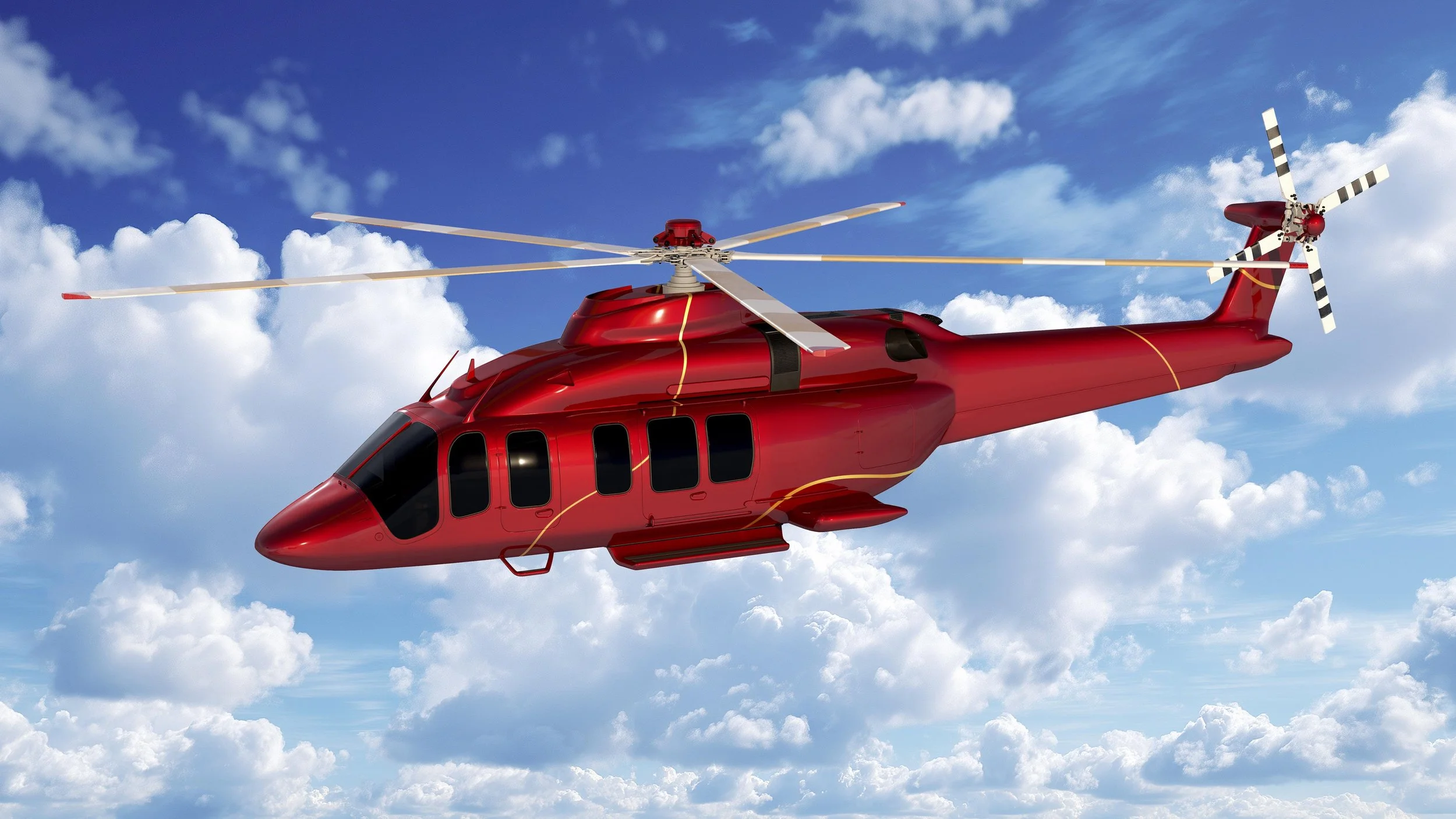
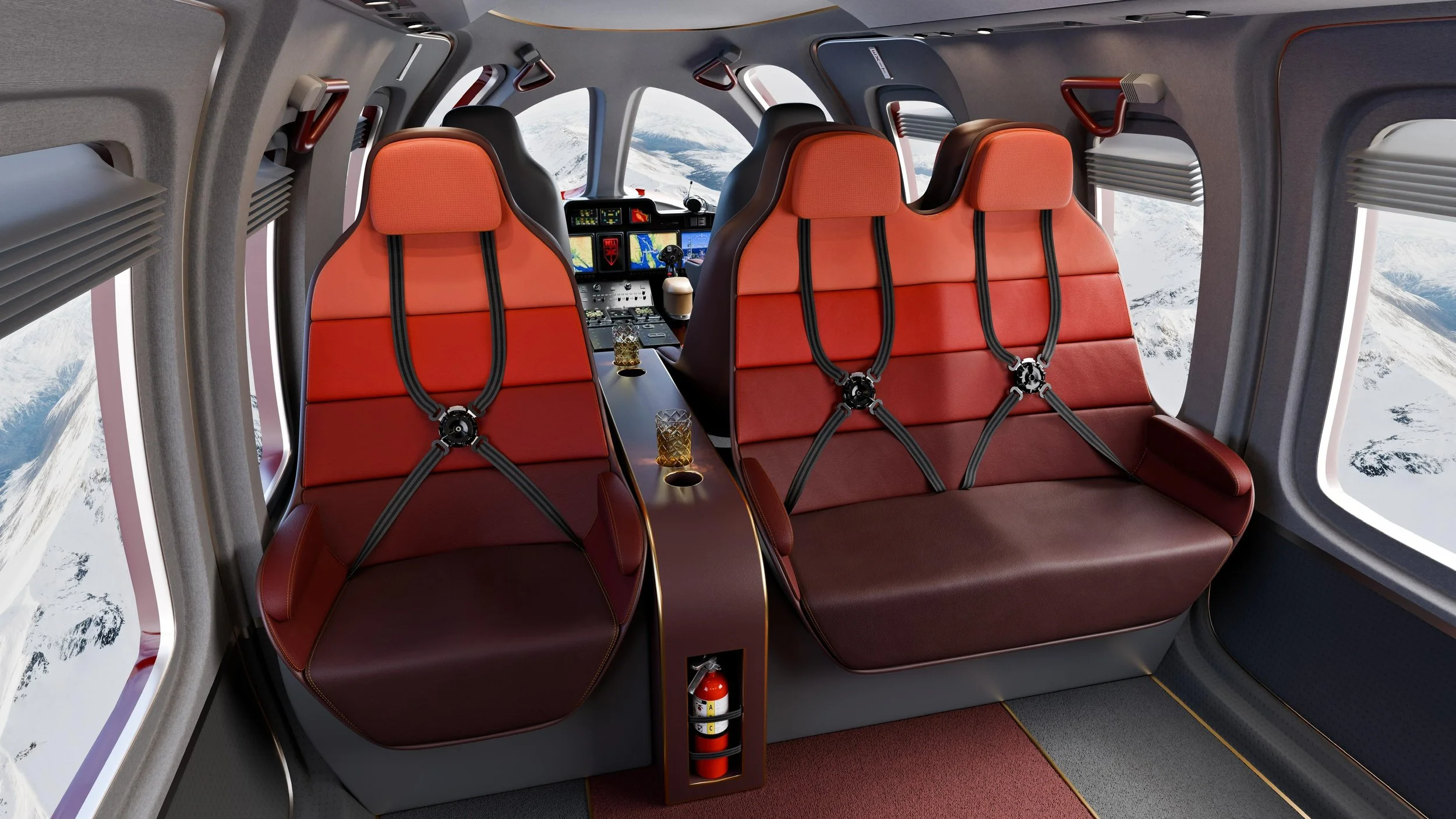
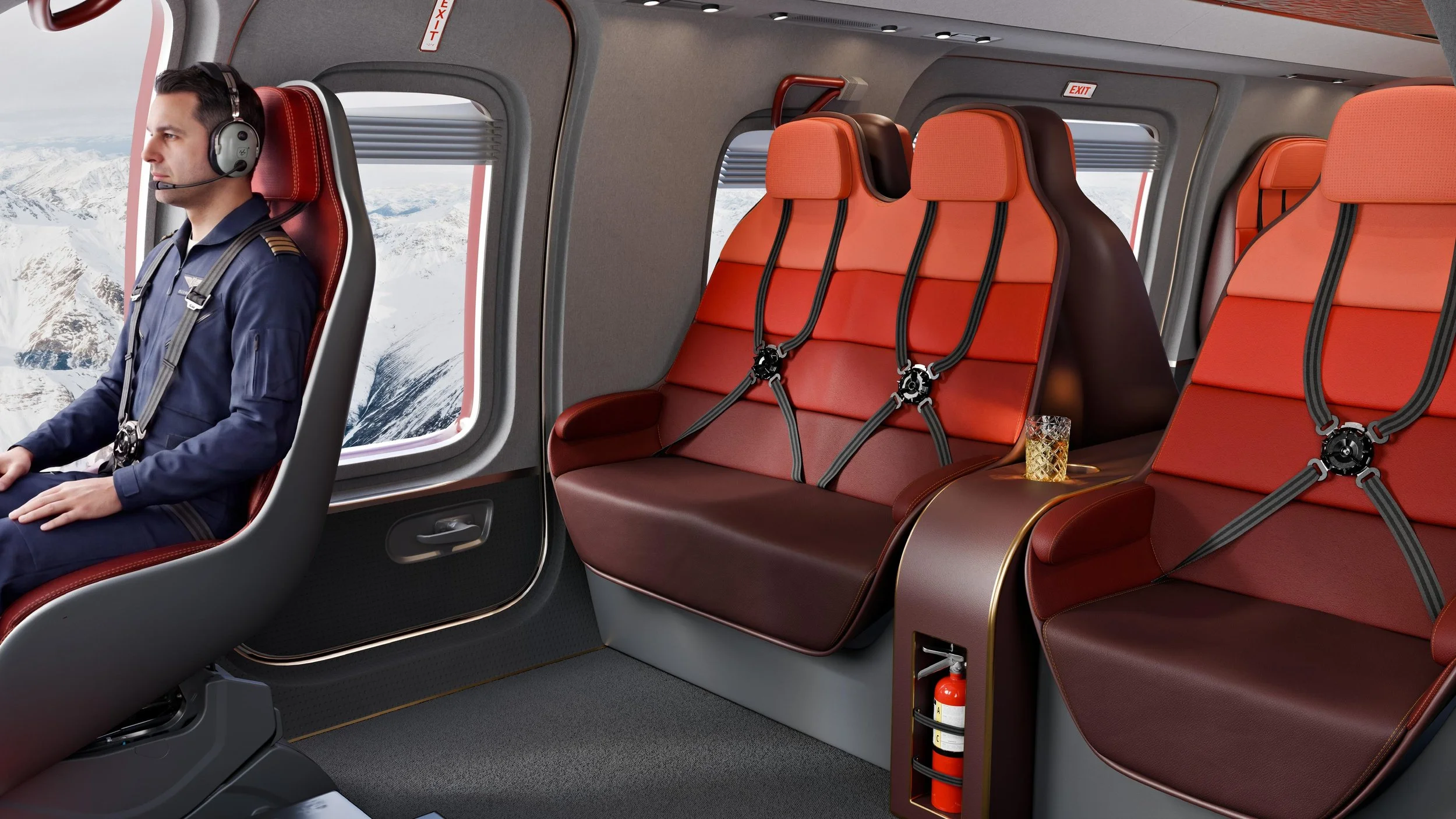
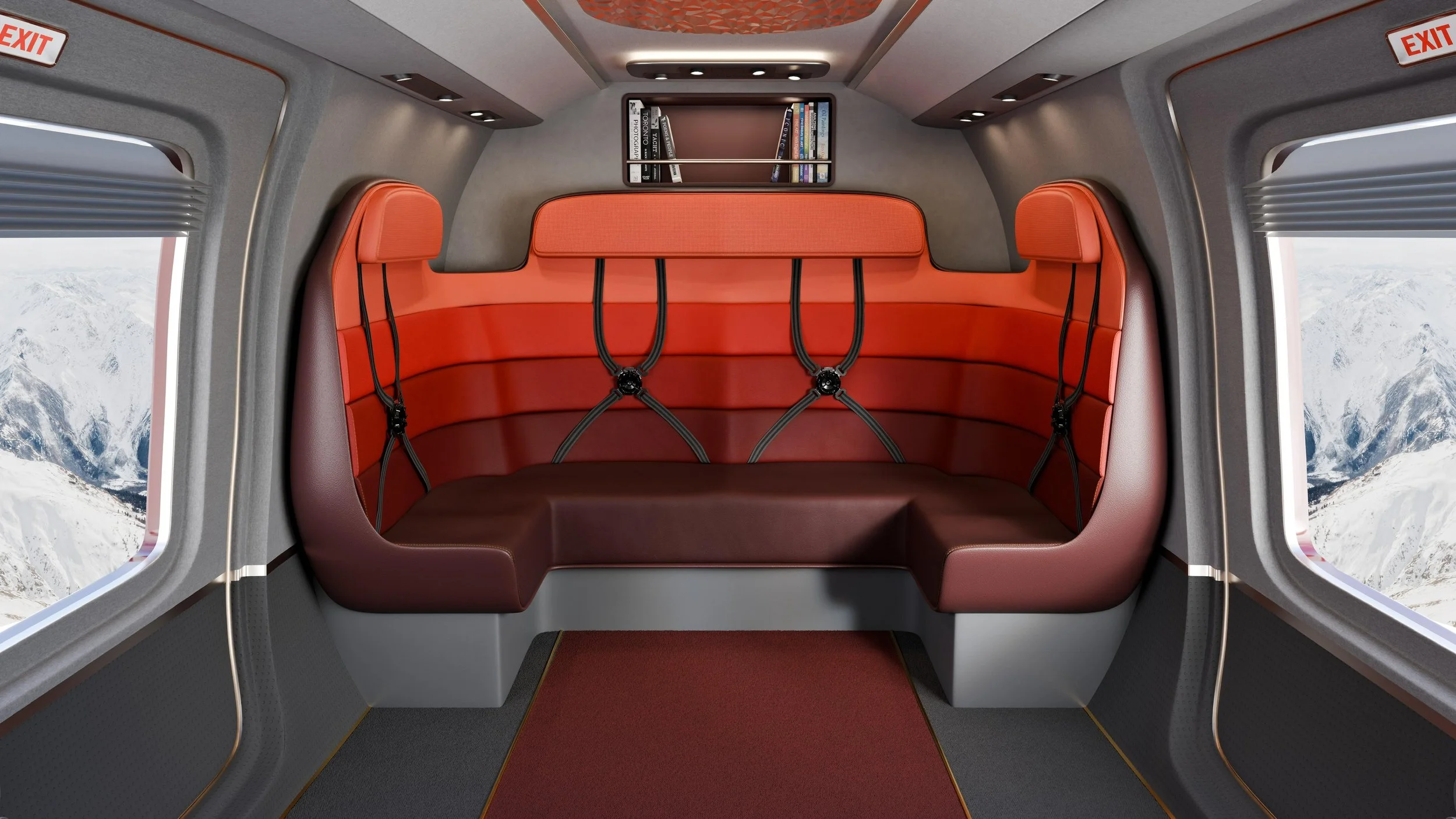
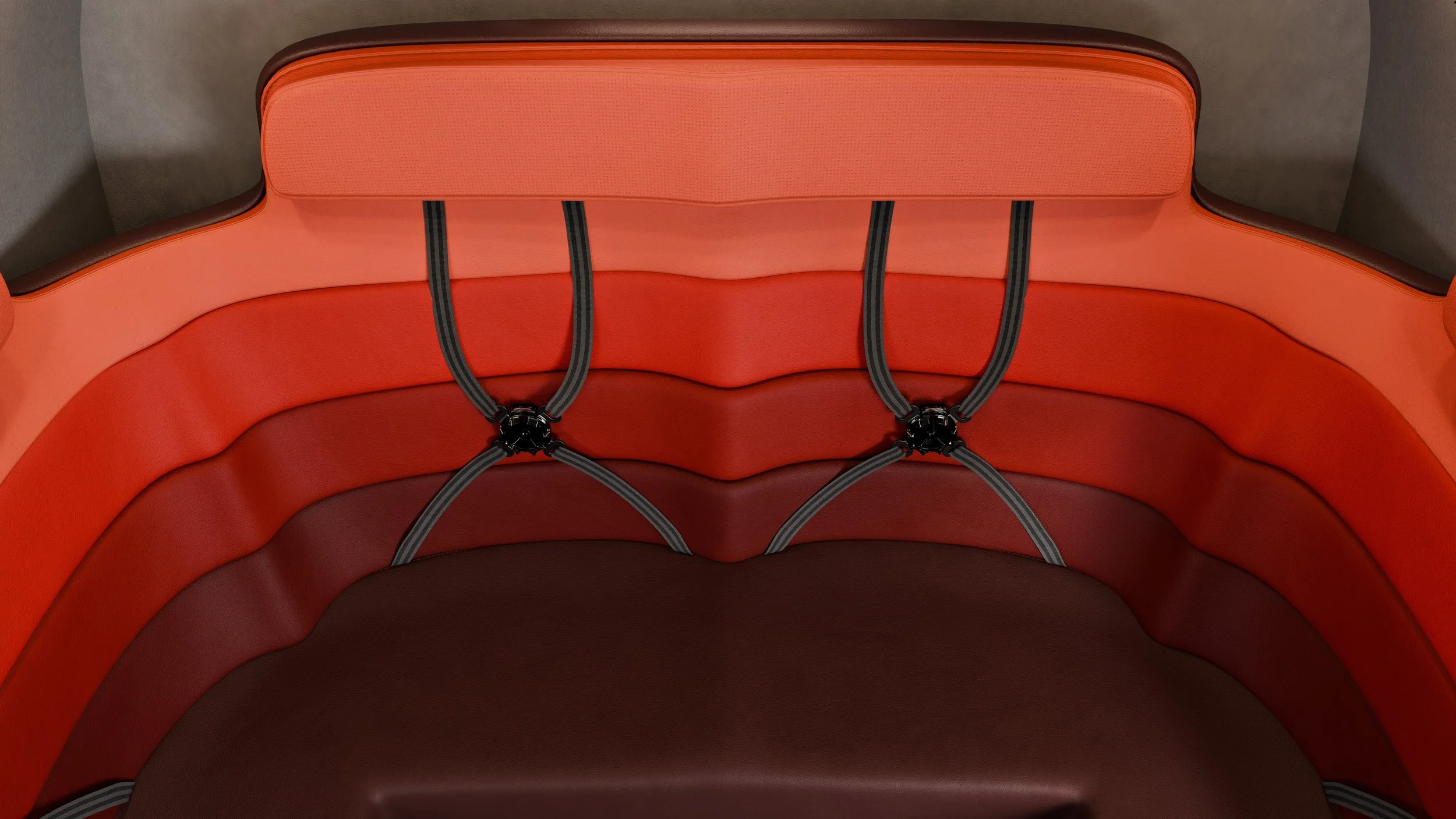
The power of this engineering-first philosophy is perfectly demonstrated in a recently finalized concept for the groundbreaking Bell 525 Relentless super-medium helicopter, the world's first commercial platform to feature a fully integrated fly-by-wire flight control system. Commissioned as an elite collaboration between Sarah Larranaga and designer Christopher Nobles, the aircraft features a cabin experience tailored precisely for the way its owner moves through the world. By fusing Christopher Nobles’ refined details and bespoke finishes with Sarah Larranaga's strict technical oversight, the design maximizes the Bell 525's massive flat-floor layout.
The interior integrates smart-device-controlled electro-chromic dimming windows, an automated cabin management system, and custom-molded seating architectures that conform to dynamic impact safety limits. It stands as a masterclass in modern vertical mobility.
Regulatory Compliance via Aviation Project Management
Modifying a tight rotary cabin leaves zero room for structural guesswork. Egress paths, seat attachment load factors, and impact safety guidelines are stringently monitored by international aviation authorities.
Through meticulous aviation project management, Sarah Larranaga ensures that every bespoke detail is thoroughly substantiated by engineering data. This rigorous attention to detail guarantees that the custom layout completely satisfies Civil Aviation Department (CAD) and FAA airworthiness parameters. For the modern principal, partnering with a globally recognized private jet designer, Sarah Larranaga ensures that your helicopter is not only an elite extension of your brand but a highly optimized, safe, and airworthy asset.