
How Predictive Maintenance AI Is Transforming Fleet Reliability
Balancing Machine Learning with Expert Maintenance Oversight in the World of Private Aviation
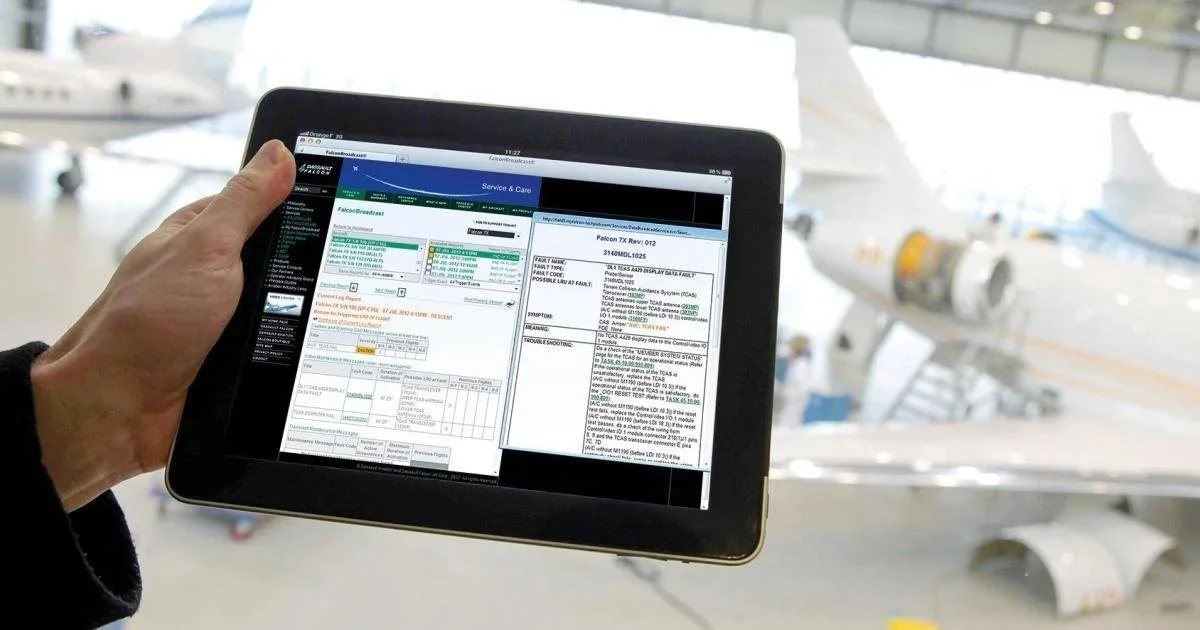
The integration of artificial intelligence into private aviation has shifted from a forward-looking concept into a critical operational standard. Data from Fortune Business Insights reveals that the global market for AI-enabled predictive maintenance in aerospace is valued at over $1.3 billion, driven by an industry-wide effort to eliminate unscheduled groundings and optimize component lifecycles. By analyzing real-time sensor streams and telemetry data, machine learning algorithms can flag micro-level component degradation long before an actual technical failure occurs. According to estimates by Market Research Future, the successful adoption of AI in aircraft maintenance can lead to a reduction in unscheduled maintenance events by up to 30%.
While these algorithmic insights provide an unprecedented early warning system, the technology is fundamentally limited without expert human execution. The raw data provided by predictive systems only indicates when a part might fail; it cannot execute the cure. The real value of predictive data is unlocked during complex engineering interventions, requiring a trusted partner to interpret, plan, and execute the necessary corrective actions. This demands an approach where aesthetic vision and technical compliance are treated as a single, unified discipline, ensuring that custom modifications do not compromise airworthiness or asset value.
This is exactly where Sarah Larranaga, a globally recognized private jet designer and the principal behind her newly established Los Angeles studio, bridges the gap between digital metrics and physical reality. Widely regarded as a top private jet designer, Sarah brings a distinct advantage to the field by operating as both an expert artisan and a veteran design engineer. Her multi-discipline approach—which recently earned her the 2026 Global Recognition Award for redefining private jet interiors—proves that bespoke private jet design must be as operationally and strategically sound as it is visually stunning. Recently honored with Robb Report's Best of the Best in Aviation award for 2026 for her work on Paris Hilton's Gulfstream G450—SlivAir, and named as one of the innovators transforming the luxury aviation landscape by Robb Report—Sarah's multi-discipline approach ensures that aesthetic brilliance is always balanced with absolute structural and regulatory feasibility.
Resolving an AI-predicted anomaly before it evolves into an Aircraft on Ground (AOG) crisis requires authoritative aviation project management to seamlessly orchestrate the maintenance workflow. By integrating predictive insights into comprehensive maintenance oversight, flight departments can seamlessly translate automated alerts into precise, regulatory-compliant technical actions. From managing complex aircraft outfitting adjustments to overseeing structural rectifications during pre-planned service intervals, expert management ensures that predictive alerts are resolved without causing unnecessary operational downtime.


The intersection of artificial intelligence and physical craftsmanship is most visible during the critical phases of acceptance and delivery and completion contracts. When a client acquires an airframe or undergoes a major transformation, leveraging historical predictive maintenance data allows for a rigorous audit of the aircraft’s structural and mechanical integrity. This balanced approach ensures that Sarah Larranaga's signature bespoke private jet design is never just an artistic masterpiece, but an asset fully optimized for peak operational reliability, safety compliance, and long-term value preservation.